
Cart
0
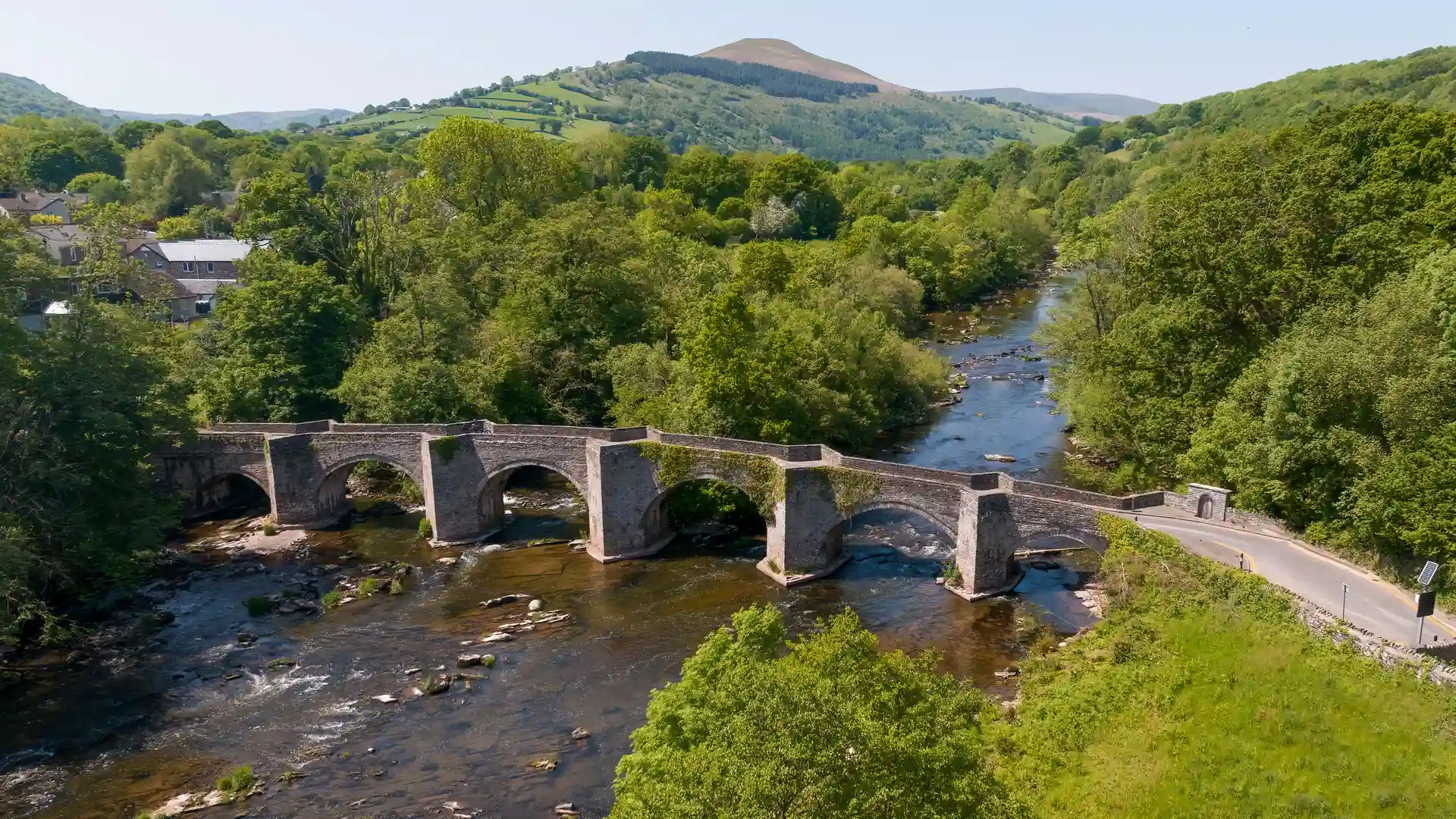
Stone bridge crossing the River Usk at Crickhowell in Powys, surrounded by green hills and trees with the Brecon Beacons in the distance.

Powys – Mountains, Moorland, and Broad Valleys

Upland plateaus, rounded summits, and long river valleys across the interior of Wales.

Powys is a large inland county of mountains, moorland, and agricultural valleys in Mid Wales. Walking routes cross Bannau Brycheiniog National Park (Brecon Beacons), and follow the Offa’s Dyke Path, Glyndŵr’s Way, and the Wye Valley Walk, linking places such as Brecon, Hay-on-Wye, Llandrindod Wells, Newtown, and Machynlleth across open hills, forest tracks, and river corridors between the English border and the Cambrian Mountains.

Much of the terrain is firm but varied underfoot. Moorland paths, farm tracks, bridleways, forest roads, and minor lanes allow steady progress, with regular sustained climbs and descents across ridgelines and upland plateaus. Surfaces are often grassy or stony, with wetter ground on higher peat and heath areas.

The landscape shifts between areas. The south includes higher mountain ground around the Brecon Beacons and Black Mountains, while central Powys opens into rolling upland and the Cambrian Mountains with broader, quieter terrain. Toward the north and east, valleys widen along the Severn and Wye with lower farmland and more settled ground.

Towns and villages are widely spaced, creating clear staging points for longer walks, with extended remote sections across upland and forested interiors between settlements.

Trails and Routes Through Powys

Offa’s Dyke Path

National Trail following the Wales–England border along ridges, farmland, and wooded hills through eastern Powys.

Glyndŵr’s Way

Long-distance circular route crossing mid-Wales upland and forest terrain between Knighton, Machynlleth, and Welshpool.

Wye Valley Walk

Linear route following the River Wye through Hay-on-Wye and Builth Wells on lower valley and riverside ground.

Epynt and Cambrian Upland Paths

Network of open hill and moorland tracks across remote interior terrain with longer distances between settlements.

Walking Character

  • Rounded mountains and upland plateaus
  • Moorland and heath
  • Forest roads and bridleways
  • River valleys and farmland
  • Sustained climbs and descents
  • Widely spaced settlements
  • Predominantly inland and remote terrain

Frequently Asked Questions

Where is Powys located?
Powys lies in Mid Wales between the English border and the Welsh west coast, covering much of the country’s central upland interior.
What defines walking here?
Open hills, long ridgelines, and broad valleys dominate, with extended rural and upland routes between small towns.
Are there long-distance routes here?
Yes. Offa’s Dyke Path, Glyndŵr’s Way, and the Wye Valley Walk all cross the county.
Is the terrain steep?
Many routes include steady, sustained climbs across hills and plateaus. Valley routes are generally easier and lower.
When is the best time to visit?
Spring through autumn offers longer daylight and firmer ground. Upland areas can be exposed and wet at any time of year.