
Cart
0
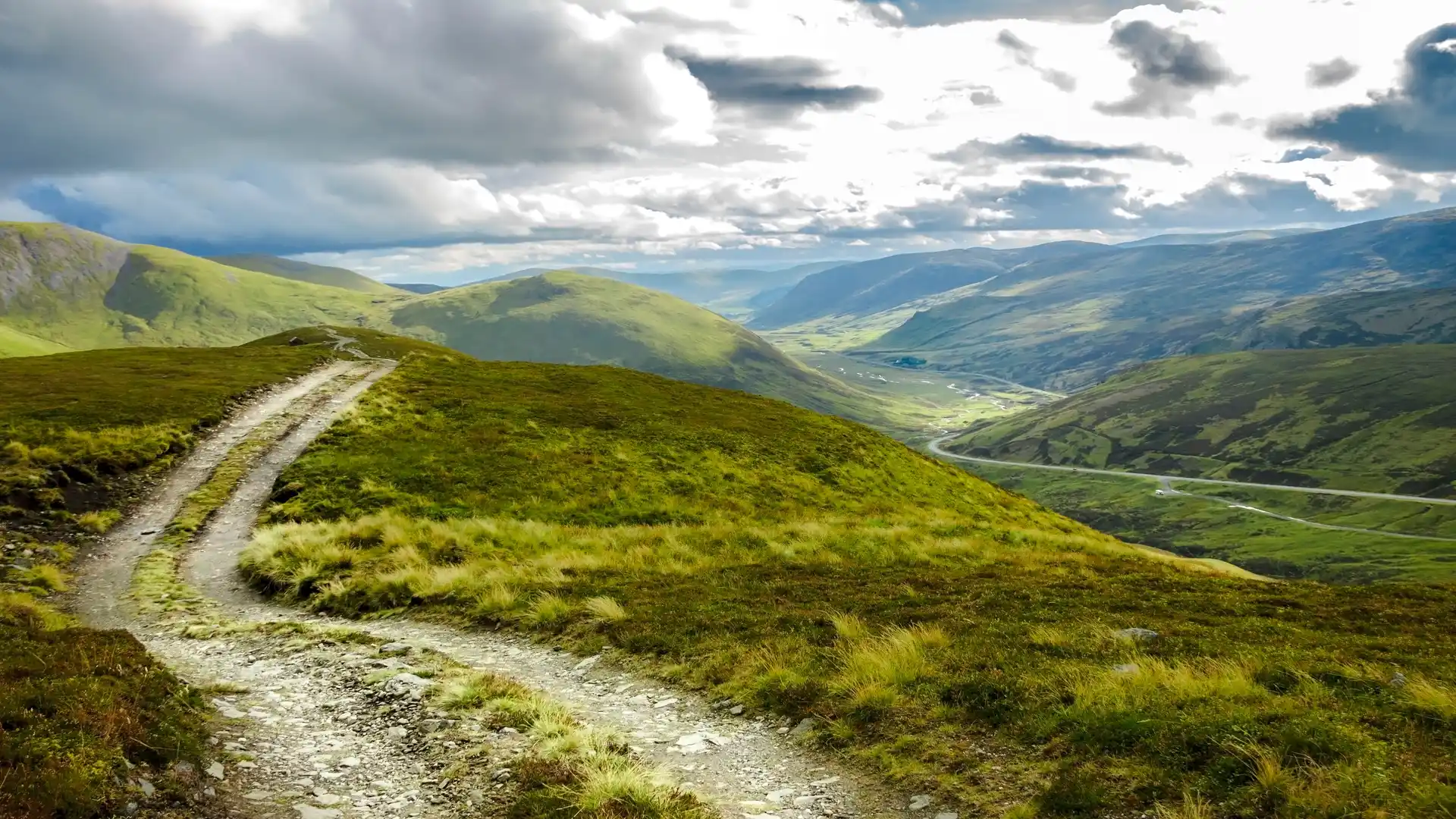
Mountain trail overlooking the wide glens and rolling hills of Deeside in the Cairngorms National Park, Scottish Highlands.

Deeside – River Valley, Highland Slopes, and Forest

A north-east Highland valley defined by the River Dee, forested slopes, and upland margins of the eastern Cairngorms

Deeside is a Highland valley area in north-east Scotland centred on the River Dee. Walking routes cross the Cairngorms National Park, follow the Deeside Way, and use riverside, forest, and estate paths linking places such as Ballater, Braemar, Aboyne, and Banchory across valley floor, woodland, and rising upland ground along the River Dee.

Much of the terrain is firm and mixed underfoot. Valley routes use riverside paths, former railway lines, forest tracks, and estate roads, allowing steady progress. Ground becomes rougher and more uneven as routes leave the valley floor for hillside paths and upland margins, with longer but generally steady climbs rather than abrupt ascents.

The landscape shifts along the valley. Lower Deeside around Banchory includes broader farmland, woodland, and gentler gradients. Upper Deeside toward Ballater and Braemar narrows, with steeper slopes, open moorland, and higher ground approaching the eastern Cairngorms, including the Lochnagar massif and surrounding glens.

Settlements are aligned along the river corridor, providing regular access points and clear movement between towns while large areas of forest and open hillside remain lightly settled.

Trails and Routes Through Deeside

Deeside Way

A long-distance route following the former railway line between Aberdeen and Ballater, using level paths through woodland, farmland, and riverside ground.

River Dee paths

Local linear routes following sections of the river corridor, commonly used for shorter walks and town-to-countryside connections.

Cairngorms forest and estate tracks

Extensive networks around Ballater, Braemar, and Glen Muick providing access to upland terrain and longer circular routes.

Lochnagar and upper glen approaches

Hill paths and estate tracks leading from Deeside into higher ground and surrounding glens on the eastern edge of the Cairngorms.

Walking Character

  • Broad river valley with rising sides
  • Mixed woodland, forest, and open hillside
  • Firm valley paths and rougher upland ground
  • Gradual climbs from valley to high ground
  • Settlements spaced along a linear corridor
  • Predominantly inland and Highland

Frequently Asked Questions

Where is Deeside located?
Deeside lies in north-east Scotland, extending inland from the outskirts of Aberdeen along the River Dee into the eastern Cairngorms.
What defines walking here?
Riverside and valley walking combined with forest tracks and access to higher upland ground toward the Cairngorms.
Are there long-distance routes here?
Yes. The Deeside Way provides a continuous long-distance route along the valley, supported by upland and estate paths.
Is the terrain steep?
Valley routes are generally gentle and level. Upland routes involve longer, steady climbs onto open high ground rather than technical steepness.
When is the best time to visit?
Late spring to early autumn offers longer daylight and clearer access to upland ground. Winter conditions can affect higher routes, with snow and ice possible above the valley floor.