
Cart
0
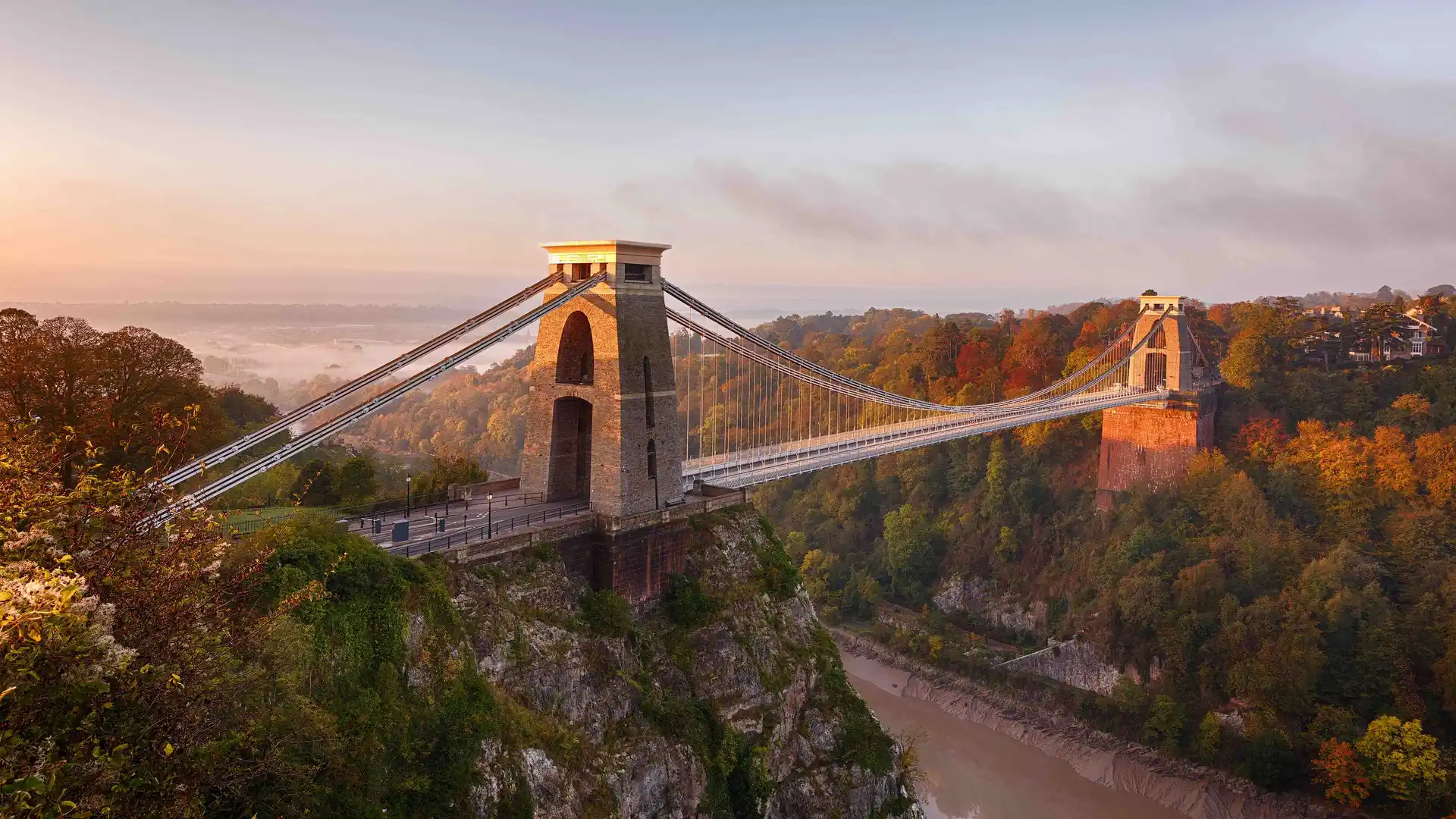
Clifton Suspension Bridge spanning the Avon Gorge at sunrise, surrounded by autumn trees, Bristol, England.

Bristol – River Gorge, Harbourside, and Rolling Hills

A compact city of river valleys, wooded slopes, and open green hills at the meeting point of Somerset and Gloucestershire.

Bristol is a unitary city area of river gorge, low hills, and urban green space in South West England. Walking routes follow the Avon Gorge and River Avon Trail and connect with the Frome Valley Walkway and the Bristol and Bath Railway Path, linking places such as Clifton, the Harbourside, Stoke Bishop, Bedminster, and Keynsham, with onward access toward the Cotswolds National Landscape and surrounding countryside.

Much of the terrain is firm and varied underfoot. Paved paths, riverside towpaths, former railway lines, woodland tracks, and parkland footpaths allow steady progress, with frequent short climbs and descents around the gorge and hillside suburbs rather than long sustained ascent.

The landscape shifts between areas. The Avon Gorge forms steep wooded slopes and limestone cliffs west of the centre, while the Frome Valley provides flatter green corridors to the north. South and east Bristol open into parks, estates, and suburban edges, with quieter ground toward the river and the former railway lines.

Neighbourhoods and green spaces are closely spaced, creating frequent access points for short walks and longer linear routes, with continuous links between parks, rivers, and outlying countryside.

Trails and Routes Through Bristol

River Avon Trail

Riverside path following the Avon through Bristol and east toward Bath, using towpaths, parkland, and minor roads along the valley floor.

Frome Valley Walkway

Green corridor route running north–south through woodland, meadows, and suburban edges, linking Stoke Park, Eastville Park, and the city centre.

Bristol and Bath Railway Path

Level shared-use path on a former railway line connecting Bristol to Bath, providing continuous off-road walking across open and suburban ground.

Cotswold Way (southern access nearby)

National Trail beginning just north of Bristol at Chipping Campden and accessible from the city’s northern edge, following escarpment and hill country along the Cotswolds.

Avon Gorge Paths

Woodland and cliffside footpaths above the Avon between Clifton Suspension Bridge and Leigh Woods, with steeper gradients and rocky ground.

Walking Character

  • Limestone gorge and wooded slopes
  • Riverside towpaths and valley floors
  • Former railway paths and level corridors
  • Urban parks and connected green space
  • Short, frequent climbs rather than long ascents
  • Dense settlement with regular access points
  • Mixed urban and semi-rural routes within a compact area

Frequently Asked Questions

Where is Bristol located?
Bristol sits in South West England on the River Avon, between Somerset and Gloucestershire, west of Bath and east of the Severn Estuary.
What defines walking here?
River corridors, gorge paths, and former railway lines provide continuous routes, with parks and woodland linking neighbourhoods to surrounding hills.
Are there long-distance routes here?
Yes. The River Avon Trail and Bristol and Bath Railway Path pass through the city, and the Cotswold Way is accessible just north of Bristol.
Is the terrain steep?
Routes along rivers and railway paths are mostly level, while paths around the Avon Gorge and hillside suburbs include short, steeper sections.
When is the best time to visit?
Routes are usable year-round. Spring and autumn offer cooler conditions; winter can bring muddy ground on woodland paths and leaf cover on slopes.