
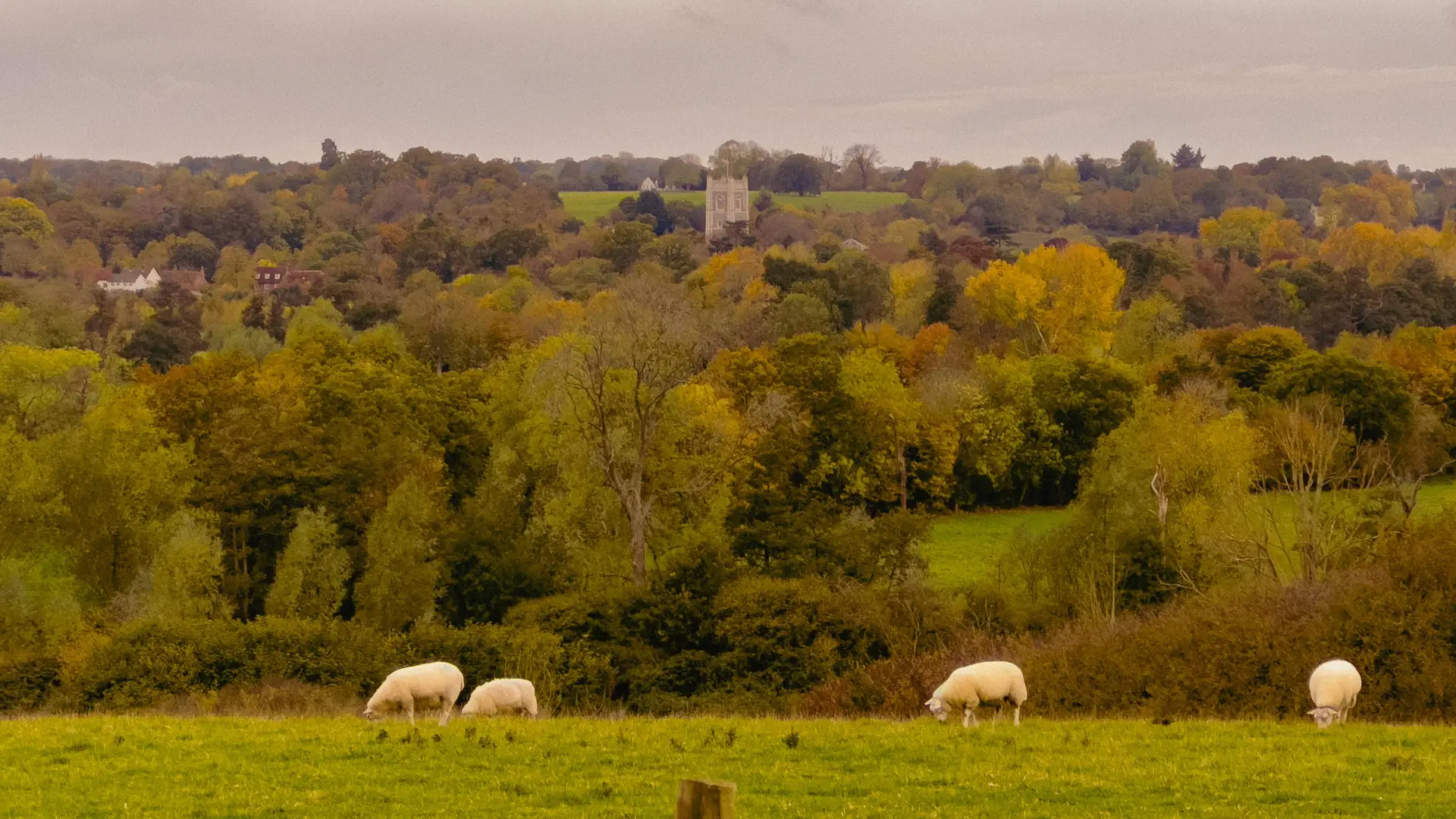
The Dedham Vale
The Land Before Us – Origins and Geology
Long before church towers rose above the meadows or willows lined the Stour, ice shaped this valley.
Over hundreds of thousands of years, shifting climates carved, flooded, and softened what we now call the Dedham Vale. The last Ice Age left behind more than cold — it laid down chalk from ancient seas, draped clay across the low hills, and etched the Stour’s sinuous course between them. When the ice finally retreated, meltwater traced new lines through silt and gravel, creating the quiet topography that still defines the borderlands of Suffolk and Essex.
Here the ground tells its own slow story: chalk filtering spring water from the downs; clay catching the rain and feeding meadow pools; sand and gravel forming gentle rises where villages later grew. Walk the footpaths today and you feel the rhythm of that deep time underfoot — soft soils yielding to your step, the river looping lazily where glaciers once surged.
The Vale’s gentleness is deceptive. Beneath every field lies a record of movement and pressure — ice sheets grinding south, rivers cutting back, floods smoothing the land. Over millennia, these forces sculpted a bowl-shaped valley hemmed by low ridgelines and threaded by tributaries. That natural enclosure gives Dedham Vale its defining calm: a sense of being held, protected, almost pastoral by design.
Modern walkers trace paths written first by geology. The meandering Stour Valley Path follows the river’s original wander; the hedgerows mirror the contours of ancient terraces. Each step folds time: the mineral, the historical, the human.
In Dedham Vale, the land itself is the first storyteller — everything that follows begins in its shaping
Page 1
The Human Landscape – Farming, Villages, and Craft
When the ice retreated, people followed the water.
By the time the Stour Valley’s soils had settled, early farmers were already shaping its edges — cutting clearings, building trackways, and marking the rhythm between meadow and ridge. The Vale’s gentle ground, half-chalk, half-clay, was easy to till and rich to graze. Springs fed the livestock; fertile floodplains yielded hay and flax. The same geology that softened the landscape also made it generous.
Through the Middle Ages, small settlements took root wherever the river bent or a mill wheel could turn. Timber from nearby woods became the frame of cottages and barns; wattle and daub sealed the gaps; reed thatch caught the light. These were not grand towns but working villages, bound to the pace of the land — sowing, shearing, harvesting, resting. Each church tower rose as a kind of anchor, a declaration that community and landscape were one.
Wool and water built the Vale’s modest prosperity. Mills along the Stour spun grain and cloth; traders moved goods by barge to Colchester and the sea. The pattern of lanes we walk today traces those same economic threads: footpaths between fields once trodden by shepherds and merchants. Even the irregular hedgerows still mark medieval boundaries, stitched like seams across the valley.
To walk here now is to move through layers of labour — a living archive of craft and endurance. The sound of a pheasant in the hedge, a plough carving the same furrow centuries later, smoke rising from a flint-walled cottage: all echoes of a landscape quietly perfected by human hands.
In Dedham Vale, culture did not conquer nature — it learned her rhythm and built a home inside it.
Page 2
Art, Story, and Spirit – Constable’s England
When John Constable painted his home valley, he wasn’t just recording a view — he was translating belonging.
Born in East Bergholt in 1776, he walked these same meadows, sketched these same clouds, and saw in the quiet geometry of the Stour Valley a truth about England itself. His paintings — The Hay Wain, Flatford Mill, Dedham Vale — turned a working landscape into a national symbol, not of empire or industry, but of intimacy: the beauty of fields lived in, not merely looked at.
Constable’s brushwork captured more than light. He painted the feeling of weather — the shimmer of air above water, the hush before a summer storm, the constant motion of a living land. In doing so, he gave ordinary rural life a kind of sacredness. The men mending a cart or driving a horse were not subjects of nostalgia; they were part of the eternal rhythm between people and place.
His art changed how the world saw England. To the Victorians, “Constable Country” became the image of home: honest, pastoral, enduring. For later generations, those canvases became a lens — sometimes romanticised, but always rooted in real geography. Walk to Flatford today, stand by the mill, and the scene is still there: the same curve of river, the same willows bending into light.
Art also became preservation. The reverence inspired by Constable’s work helped awaken a broader movement to protect rural landscapes — a cultural seed that would eventually lead to the creation of National Landscapes and the idea of countryside as heritage.
In Dedham Vale, art, story, and spirit converge. Every brushstroke feels like a reminder that beauty and labour, faith and field, belong together — and that the act of looking can itself be an act of care.
Page 3
Nature and Renewal – Wildlife, Water, and Woodlands
The Dedham Vale is alive with quiet movement.
Beneath the surface calm of the meadows, life flickers in every reed and ripple. Kingfishers flash along the riverbank; otters trace the bends of the Stour before dawn. In summer, the air hums with damselflies and swallows, and at dusk, bats circle above the willows like ink in fading light. This is the gentle wild — not dramatic, but intimate, a mosaic of field, hedgerow, and water meadow shaped by both nature and centuries of care.
The landscape’s balance depends on its patchwork: pastures grazed lightly by cattle, wetlands left to flood, and old coppiced woods where bluebells bloom in spring. Ancient oaks hold fungi and insects that thrive nowhere else; hedgerows stitch together corridors for birds and small mammals. It is a living network — fragile, resilient, endlessly adapting.
Conservation here is not about keeping things still; it’s about letting them breathe. The Dedham Vale National Landscape protects this equilibrium, working with farmers and communities to maintain the valley’s character while restoring what has been lost. Projects replant hedges, open old ponds, and encourage pollinators back into the margins. Even small acts — a wildflower verge, a no-mow meadow, a new willow cutting — help thread vitality through the valley again.
Yet the pressures are real. Climate change shifts rainfall and floods the lower fields more often; development edges outward from towns; the hum of traffic intrudes on still mornings. Each generation faces the question: how do we hold onto the harmony between use and wonder?
Here, renewal is not a single act but a promise — that the river will keep running, the oaks will keep growing, and that walking this land with care might still keep it alive.
Page 4
The Modern Journey – Walking, Reflection, and Reconnection
To walk through the Dedham Vale today is to move through time made visible.
Each bend of the river reveals a layer — geology beneath field, field beneath memory, memory beneath sky. The same footpaths that once carried millers, shepherds, and artists now carry travellers seeking something quieter: a rhythm that slows the world back to human pace.
The Stour Valley Path remains the valley’s spine, winding from village to village, crossing meadows, bridges, and borders. The Essex Way brushes its southern edge, and the Dedham Circular gathers the essence of the landscape into a single day’s journey. These trails are more than routes; they are lines of connection, linking the past to the present, the local to the universal.
Walking here is both outer and inner travel. The sound of boots on damp earth, the drift of willow leaves in the breeze, the scent of hay and river silt — all work like quiet medicine. It’s easy to forget that this calm was made, tended, and protected. Every stile, every footpath sign, every stretch of managed meadow is a reminder of stewardship.
Dedham Vale invites reflection, not escape. It shows how beauty can endure without being consumed — how tourism can be gentle, how movement can heal. For many, a day here becomes a kind of pilgrimage: not to a destination, but to a state of attention.
And when you pause by the water at Flatford or Dedham Bridge, you sense the whole story beneath your feet — the ice, the labour, the art, the renewal. You realise that travel, at its best, is not about reaching somewhere new. It’s about remembering where we already belong.
Page 5