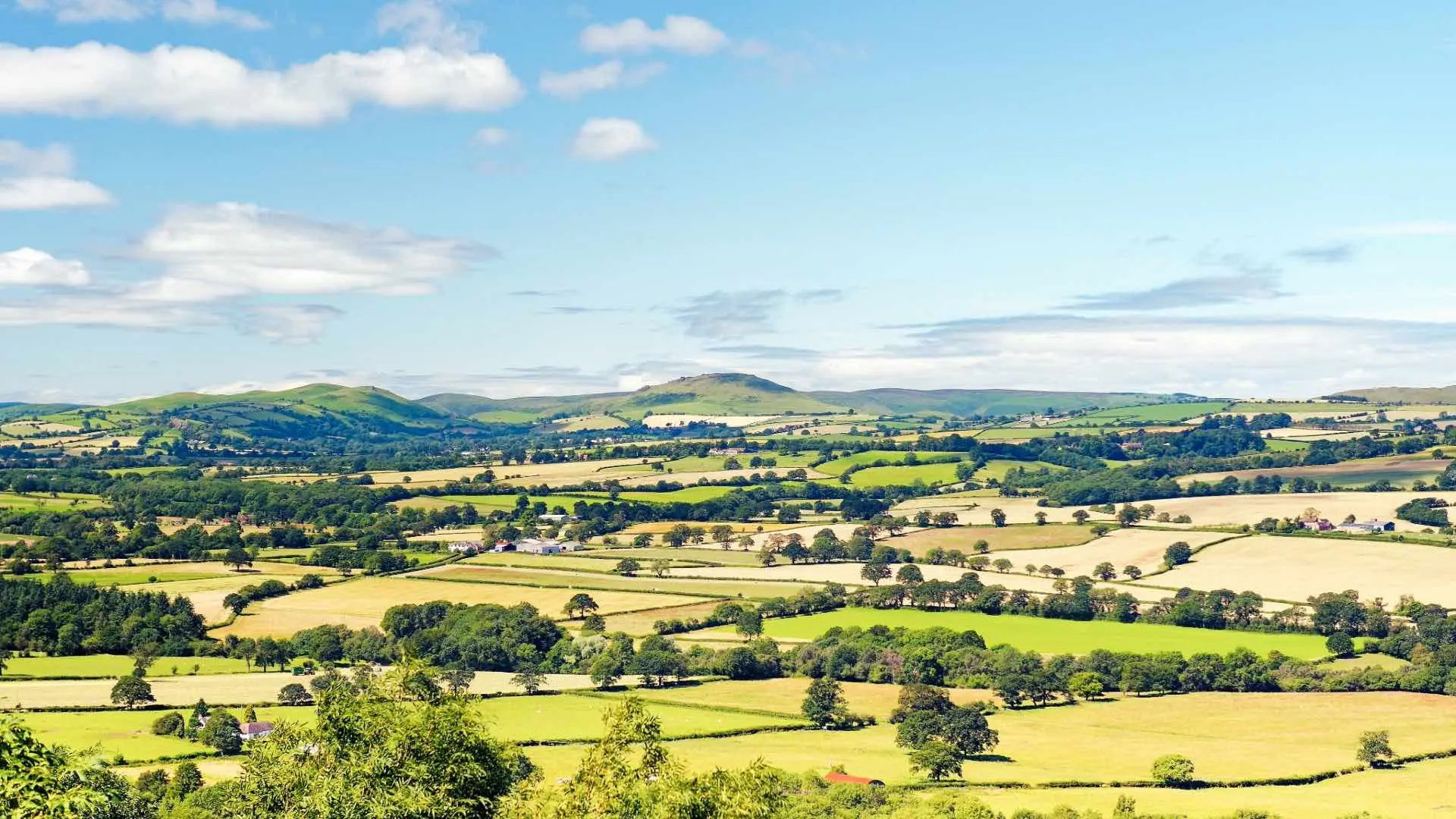
Expansive view across the English country side with green fields and hills on the horizon.
English countryside, England

Walking Towards a Sustainable Future

Adventure with Awareness

Adventure is not just about how far we go, but how we choose to move through the world. Each journey leaves a trace — on the land, on the communities we encounter, and on ourselves. The question is not whether we leave a mark, but what kind of mark it will be.

Self Guided — Self Aware

The Mindset of Conscious Travel

Travel has always been an act of curiosity: a desire to see what lies beyond the horizon. But in today’s world, it also carries responsibility. The freedom to explore comes with the duty to protect.

To be self guided is not merely to choose your own route. It is to choose how you walk that route. Independence and awareness are inseparable.

This mindset values:

  • Independence — setting your own pace, following your own rhythm, writing your own story
  • Sustainability — walking lighter, supporting communities, reducing impact
  • Awareness — recognising the fragility of landscapes and cultures, and honouring them
  • Connection — slowing down long enough to build genuine ties with people and place

When we travel in this way, adventure becomes more than movement. It becomes meaning.

Walking as a Way Forward

Walking is one of the simplest and most sustainable ways to travel, yet in its simplicity lies something profound. A step requires no fuel but the body, no noise but the breath, no infrastructure but a path.

Walking holidays embody this truth. Trails often follow ancient routes, linking villages, valleys, and coastlines. Each path is a thread of history and nature, connecting us not only to landscapes but to stories.

And walking spreads benefit. Instead of concentrating tourism in crowded hubs, it disperses it gently along the way:

  • A hiker stopping for lunch in a village café keeps that café alive
  • A night spent in a countryside inn sustains local families
  • A pause by a heritage site gives value to traditions that might otherwise fade

Walking proves that adventure can enrich the places it touches instead of depleting them. It reminds us that choosing to go slower often takes us further.

Lessons from the Trail

Consider the South West Coast Path in England — 630 miles of dramatic cliffs, fishing villages, and wild coves. To walk it is to see not only breathtaking views but also a network of communities sustained by those who pass through.

Or take Spain’s Camino de Santiago. For centuries, pilgrims have walked its routes, not just for spiritual reward but for connection, reflection, and exchange. Each step is a reminder that walking is as much about inward discovery as outward journey.

In Scotland, the West Highland Way winds through lochs and highlands, inviting travellers into landscapes that demand respect. It proves that adventure and fragility coexist — and that to walk responsibly is to keep those places alive for future generations.

These trails, and countless others worldwide, show us that sustainable adventure is not theory. It is already happening, wherever people walk with awareness.

Adventure with Responsibility

Adventure, at its best, should stir the spirit. But it must also steady the conscience. Mountains are not playgrounds; coasts are not commodities. They are living systems, rich with life and meaning, and our presence must honour that.

To travel responsibly is to:

  • Seek challenge without leaving scars
  • Explore wildness without overwhelming it
  • Take memories while ensuring places endure for others

This balance does not diminish adventure. It deepens it. There is greater joy in knowing that your footsteps have not eroded but enriched, not taken but given. The reward is not only reaching a summit or finishing a trail, but doing so with integrity.

Beyond the Path: Communities and Connection

Sustainable travel is not just about the land beneath our feet. It is also about the people who live alongside it.

A self guided, self aware traveller pauses to listen as much as to walk. They stay in locally owned inns rather than anonymous chains. They choose food from the region rather than imports flown halfway across the world. They ask questions, share stories, and treat encounters as exchanges rather than transactions.

Every small decision strengthens the cultural fabric of a place. In a time when many rural and coastal communities face economic pressures, thoughtful travellers can be a lifeline.

The Future of Travel is Slower

The modern world is built on speed. Flights compress continents into hours. Itineraries are filled with checklists. The idea of “seeing it all” has become a badge of achievement. Yet in chasing speed, we often miss the essence.

The future of travel will not be about more — it will be about less, but better. Fewer destinations, more deeply experienced. Fewer snapshots, more lasting memories. Less consumption, more connection.

To walk is to resist speed. To walk is to give time back to the journey. To walk is to allow landscapes and people to matter again.

Self Guided — Self Aware

The way we travel matters. Climate, culture, and community all demand a new approach — one that puts sustainability at the heart of adventure.

To be self guided is to take ownership of how we move.
To be self aware is to ensure that movement enriches more than just ourselves.

Together they form a philosophy, a path, a future.

Closing

Walking towards a sustainable future is not an abstract idea. It is already happening — every time a traveller chooses the slower path, supports a local business, pauses to listen, or treads with care.

Adventure will always call us into the world. But how we answer defines the future.

To travel self guided is to travel self aware — into a more sustainable tomorrow.

Frequently Asked Questions

What does self guided mean in travel?

Self guided means more than travelling independently. It is a mindset: choosing your own path while remaining aware of your impact. To be self guided is to be self aware — travelling with independence, responsibility, and connection.

Why is walking considered sustainable travel?

Walking has one of the lightest footprints of any form of tourism. Trails require little infrastructure, journeys unfold at human speed, and local communities benefit directly when travellers stay, eat, and spend along the way.

How does self guided travel support local communities?

By staying in locally owned inns, eating regional food, and spending in small businesses, self guided travellers help distribute tourism more evenly. Each step can strengthen the cultural and economic fabric of a place.

What makes self guided travel different from mass tourism?

Mass tourism often concentrates people in crowded hubs, overwhelming landscapes and communities. Self guided travel spreads people out, slows them down, and encourages deeper, more respectful connections with place and people.

Is self guided travel only about walking holidays?

Walking is its clearest expression, but the self guided — self aware philosophy applies to all forms of independent, conscious adventure. Whether hiking, cycling, paddling, or exploring on your own terms, the mindset remains the same.

NATIONAL LANDSCAPE STAY
NORTHERN IRELAND | COUNTY ANTRIM | BUSHMILLS
CAUSEWAY COAST NATIONAL LANDSCAPE (AONB)
Front view of Causeway Lodge near Bushmills on the Causeway Coast, a 5-star guest house within the Causeway Coast National Landscape and close to the Giant’s Causeway.
Self Guided Travel logo SGT white letters on teal background
Causeway Lodge
www.selfguidedtravel.com > explore > causeway-lodge
Causeway Lodge – Causeway Coast Stay | Self Guided Travel

Basalt cliffs, coastal paths & open headlands define the Causeway Coast — Causeway Lodge is a high-quality, family-run stay for walking holidays near the Giant’s Causeway and Causeway Coast Way.

SELF-GUIDED HIKING HOLIDAYS
FRANCE | PROVENCE
LUBERON & HILLTOP VILLAGES
Hilltop village in the Luberon, Provence, France — classic scenery for self-guided hiking holidays with High Point Holidays.
Logo SGT white letters on a teal background.
High Point Holidays
www.selfguidedtravel.com > explore > high-point-holidays
High Point Holidays | Self Guided Travel

Hilltop villages, vineyards & mountain foothills define southern France — High Point creates self-guided hiking holidays with route notes, local stays & baggage transfers across Provence and beyond.

SELF-GUIDED WALKING HOLIDAYS
SCOTLAND | EDINBURGH
WEST HIGHLAND WAY
Path above Loch Lomond on the West Highland Way, Scotland — classic scenery from self-guided walking holidays with Absolute Escapes.
Logo SGT white letters on a teal background.
Absolute Escapes
www.selfguidedtravel.com > explore > absolute-escapes
Absolute Escapes | Self Guided Travel

Lochside paths, Highland glens & long-distance trails define Scotland — Absolute Escapes creates self-guided walking holidays with planning, stays & luggage transfers, including the West Highland Way.

SELF-GUIDED WALKING HOLIDAYS
IRELAND | GALWAY
WILD ATLANTIC WAY
Cliffs and coves near Dunquin Harbour on the Dingle Peninsula, County Kerry — a highlight of self-guided walking holidays in Ireland with Hillwalk Tours.
Logo SGT white letters on a teal background.
Hillwalk Tours
www.selfguidedtravel.com > explore > hillwalk-tours
Hillwalk Tours | Self Guided Travel

Atlantic headlands, mountain trails & island routes shape Ireland’s west — Hillwalk Tours offers self-guided walking holidays with local stays, route notes & luggage transfers.

SELF-GUIDED WALKING HOLIDAYS
WALES | MONMOUTHSHIRE
WYE VALLEY WALK
Logo SGT white letters on a teal background.
Celtic Trails Walking Holidays
www.selfguidedtravel.com > explore > celtic-trails-walking-holidays
Celtic Trails Walking Holidays | Self Guided Travel

River gorges, woodland trails & border-country paths shape the Wye Valley — Celtic Trails offers self-guided walking holidays with hand-picked stays, route notes & luggage transfers.

SELF-GUIDED WALKING HOLIDAYS
SOUTH WEST ENGLAND | CORNWALL
SOUTH WEST COAST PATH
Steps above turquoise waters at Porthcurno, Cornwall — part of the South West Coast Path, popular with self-guided walking holidays from Encounter Walking Holidays.
Logo SGT white letters on a teal background.
Encounter Walking Holidays
www.selfguidedtravel.com > explore > encounter-walking-holidays
Encounter Walking Holidays | Self Guided Travel

Sea cliffs, surf beaches & coastal lanes frame Cornwall — Encounter offers self-guided walking holidays with accommodation, planning & luggage transfers on the South West Coast Path.

SELF-GUIDED WALKING HOLIDAYS
NORTH WEST ENGLAND | CUMBRIA
LAKE DISTRICT NATIONAL PARK
Scenic view over Windermere in the Lake District, with a stone wall and wooden stile along a hillside walking trail — a classic setting for walking holidays in Cumbria, England.
Logo SGT white letters on a teal background.
Mickledore Walking Holidays
www.selfguidedtravel.com > explore > mickledore-walking-holidays
Mickledore Walking Holidays | Self Guided Travel

Fells, lakeshore paths & classic Lakeland valleys define Cumbria — Mickledore creates self-guided walking holidays with route notes, stays & luggage transfers in the Lake District.

NATIONAL PARK STAY
North Wales | Gwynedd | Blaenau Ffestiniog
ERYRI (SNOWDONIA) NATIONAL PARK
Plas Weunydd Hotel at Blaenau Ffestiniog, set against wooded hillsides in Eryri (Snowdonia) National Park, Wales.
Logo SGT white letters on a teal background.
Plas Weunydd Hotel
www.selfguidedtravel.com > explore > plas-weunydd-hotel
Plas Weunydd Hotel – Snowdonia National Park Stay | Self Guided Travel

Slate hills, mountain paths & industrial heritage frame Blaenau Ffestiniog — Plas Weunydd offers a stylish, adventure-ready stay for walkers exploring Eryri (Snowdonia) National Park.