
Cart
0
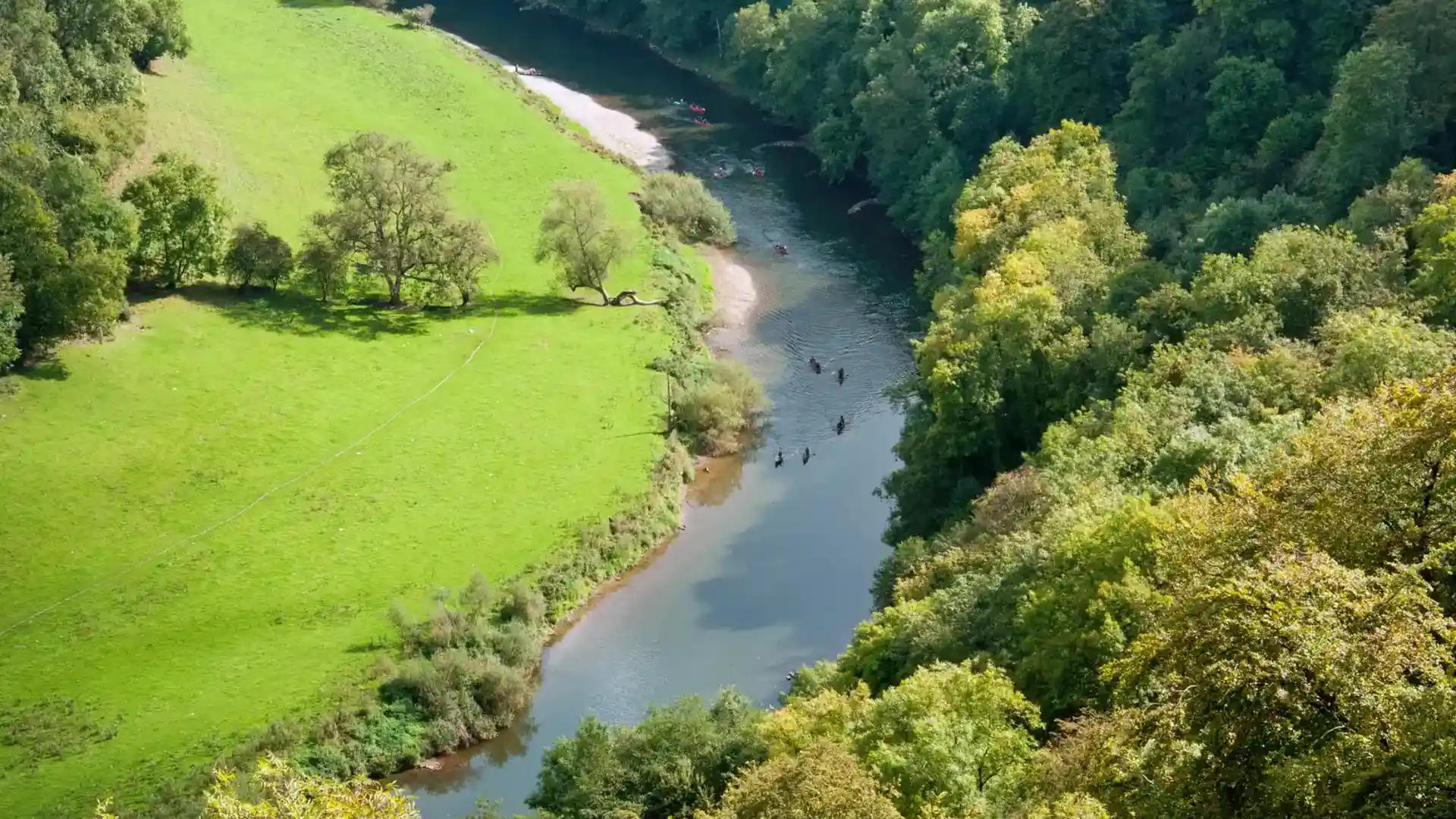
Canoeists paddling along a winding stretch of the River Wye, surrounded by green meadows and dense woodland in the Wye Valley National Landscape.

Wye Valley National Landscape – Wooded Gorges, Limestone Cliffs, and River Valleys

River Landscapes Shaped by Limestone, Woodland, and Long Human Use

The Wye Valley National Landscape lies along the border between England and Wales, following the course of the River Wye as it cuts through a steep-sided limestone valley between Herefordshire, Gloucestershire, and Monmouthshire. Defined by wooded gorges, dramatic cliffs, and looping river bends, it is one of Britain’s most intimate and visually rich walking landscapes.

Walking journeys in the Wye Valley are shaped by enclosure and contrast rather than elevation. Routes often move between riverside paths, woodland tracks, and high viewpoints perched above the valley floor, creating frequent shifts in perspective. This is a landscape where walking feels immersive and layered, with short climbs delivering sudden views before paths return to the shelter of trees and riverbanks.

The structure of walking across the landscape is set by the river itself. The Wye acts as a constant reference point, with paths tracing its bends, crossing between banks, and climbing above it to reveal wider views across the valley. Movement through the landscape is fluid rather than linear, with loops and linked sections encouraging exploratory walking rather than long, straight journeys.

Limestone underpins much of the valley’s character. Sheer cliffs and rocky outcrops rise above the river in places, while caves, scarps, and wooded slopes create varied terrain underfoot. Woodland dominates the steeper sides of the valley, forming one of Britain’s most extensive areas of ancient broadleaf woodland, with oak, beech, and ash shaping the walking experience through light, shade, and seasonal change.

Human history is deeply embedded in the landscape. Settlements, castles, abbeys, and riverside towns reflect centuries of movement, trade, and defence along the valley corridor. Walking routes frequently pass through historic places and long-used paths, reinforcing the close relationship between landscape, river, and human activity.

Above the river, elevated paths and viewpoints provide a different rhythm of walking. Clifftop routes and high woodland tracks offer quieter, more contemplative walking with wide views across the valley, contrasting with the intimacy of riverside sections below. These transitions between low and high ground are a defining feature of the Wye Valley experience.

Beyond walking, the landscape supports a range of gentle outdoor pursuits. Canoeing and kayaking follow the river’s slow curves, while cycling, wildlife watching, and photography benefit from the valley’s varied habitats and constantly changing light. The sheltered nature of the valley creates a long walking season, with woodland colour and riverside interest throughout the year.

Accommodation is spread through villages, market towns, and rural inns along the valley. Bases close to the river or on higher ground provide easy access to footpaths and river routes, allowing walkers to build flexible itineraries that combine short sections, loops, and longer linked walks.

For walkers seeking wooded landscapes, dramatic river scenery, and a sense of movement shaped by water rather than height, the Wye Valley National Landscape offers one of the most rewarding and distinctive walking environments in Britain.

Where to Walk and Explore

River Wye Corridor

Riverside paths and low-level walking following the winding course of the river through woodland and pasture.

Wooded Slopes and Limestone Cliffs

Climbing routes and woodland tracks rising above the valley floor to cliffs, viewpoints, and elevated paths.

Historic Towns and Valley Loops

Linked walking routes connecting riverside towns, crossings, and long-established paths.

Adventure Highlights

  • Steep wooded gorges and limestone cliffs
  • Intimate riverside walking along the River Wye
  • Elevated viewpoints above the valley floor
  • Extensive ancient woodland and seasonal colour
  • Strong links between landscape, river, and historic settlements
  • One of Britain’s most distinctive lowland walking landscapes

Frequently Asked Questions

Where is the Wye Valley National Landscape located?

It lies along the England–Wales border, following the River Wye through Herefordshire, Gloucestershire, and Monmouthshire.

What defines walking in the Wye Valley?

Wooded paths, riverside routes, short climbs, and frequent changes between enclosure and open views.

Is the terrain mountainous?

No. The landscape is lowland, but steep valley sides and cliffs create varied and sometimes demanding walking.

Can walking be combined with river activities?

Yes. Walking pairs naturally with canoeing, kayaking, and riverside exploration.

When is the best time to visit?

Spring and autumn are especially popular for woodland colour and comfortable walking conditions, though the valley is rewarding year-round.