
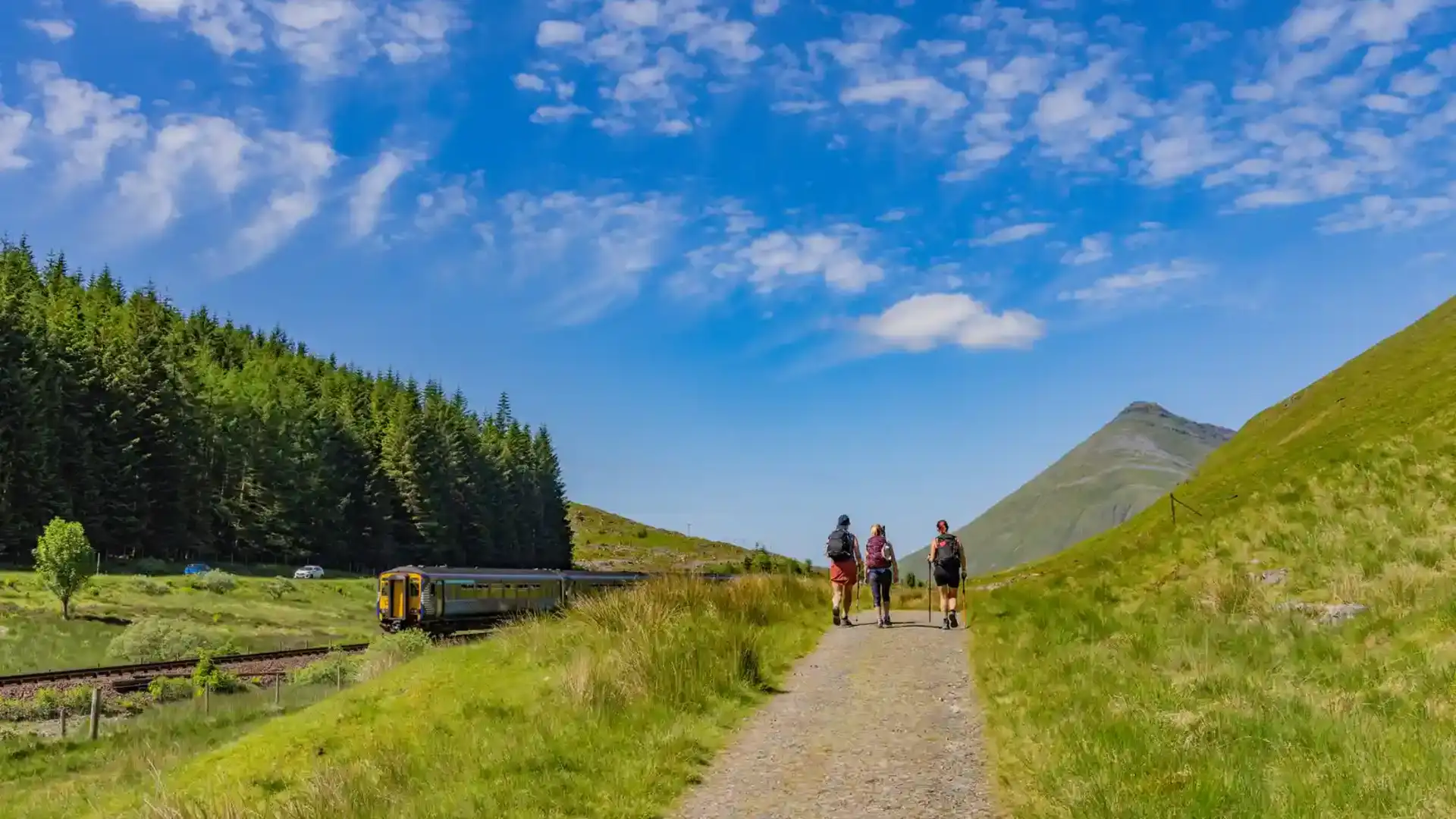
Loch shores, open moor, and long passes into the Scottish Highlands
The West Highland Way leaves the northern edge of Glasgow and heads steadily into the countryside, following old drove roads, woodland tracks, and quiet lanes towards the first hills of the Highlands. For those exploring Scotland through self-guided travel, the route forms a continuous walking line between Milngavie and Fort William, linking farmland, lochs, glens, and mountain passes into a gradual journey north through changing landscapes and places.
The early miles move gently through fields and forest before reaching the wooded shores of Loch Lomond, where the path narrows and twists along the water’s edge within Loch Lomond & The Trossachs National Park. Here the character shifts. Roots, rocks, and small climbs slow progress, and the sense of leaving the lowlands behind becomes tangible as the trail begins to feel wilder and more remote.
Beyond Crianlarich and Tyndrum the landscape opens further. Tracks cross broad glens and climb onto exposed ground where weather and light shape each day’s walk. Rannoch Moor stretches outward in peat, grass, and sky, its long straight paths cutting through a wide, quiet emptiness. Movement becomes steady and deliberate, defined by distance and terrain rather than settlements or roads.
Glen Coe and Glen Nevis follow, their steep sides and deep valleys enclosing the route beneath high ridgelines and scattered burns. Old military roads and stone tracks carry the trail forward through some of Scotland’s most recognisable mountain country, where scale and space feel markedly different from the gentler countryside at the start.
Settlements appear at natural intervals — a small inn, a cluster of houses, a crossing point in the glen — offering pauses rather than destinations. These breaks give the walk a human rhythm while reinforcing its long history as a route of passage through the Highlands.
By the time Fort William comes into view, the transition is complete. What began among lowland fields ends beneath the slopes of Ben Nevis, with the landscape broader, higher, and more elemental than where the journey began. The West Highland Way is defined less by any single landmark than by that steady progression north — a sustained crossing of country experienced step by step.
For many walkers, its appeal lies in that continuity: a demanding but rewarding line through Scotland’s landscapes, where distance, weather, and terrain shape the experience as much as the places along the way.
Trail Overview
Distance
Approximately 96 miles / 154 km
Typical time on foot
6–8 days
Start
Milngavie, near Glasgow
Finish
Fort William
Terrain
Forest paths, lochside tracks, rocky shoreline sections, open moorland, mountain passes, and old military roads
