
The Scottish Highlands – Mountains, Glens, Lochs, and Long-Distance Trails
Vast lochs, sweeping glens, and ancient peaks shaped by ice, weather, and distance
The Scottish Highlands are defined by self-guided travel, walking routes, dramatic landscapes, and the places connected by them. Long-distance trails such as the West Highland Way and Great Glen Way link Fort William, Aviemore, and Inverness, passing through Cairngorms National Park and Loch Lomond and The Trossachs National Park to create one of Britain’s most expansive regions for steady movement between mountain, glen, forest, and loch.
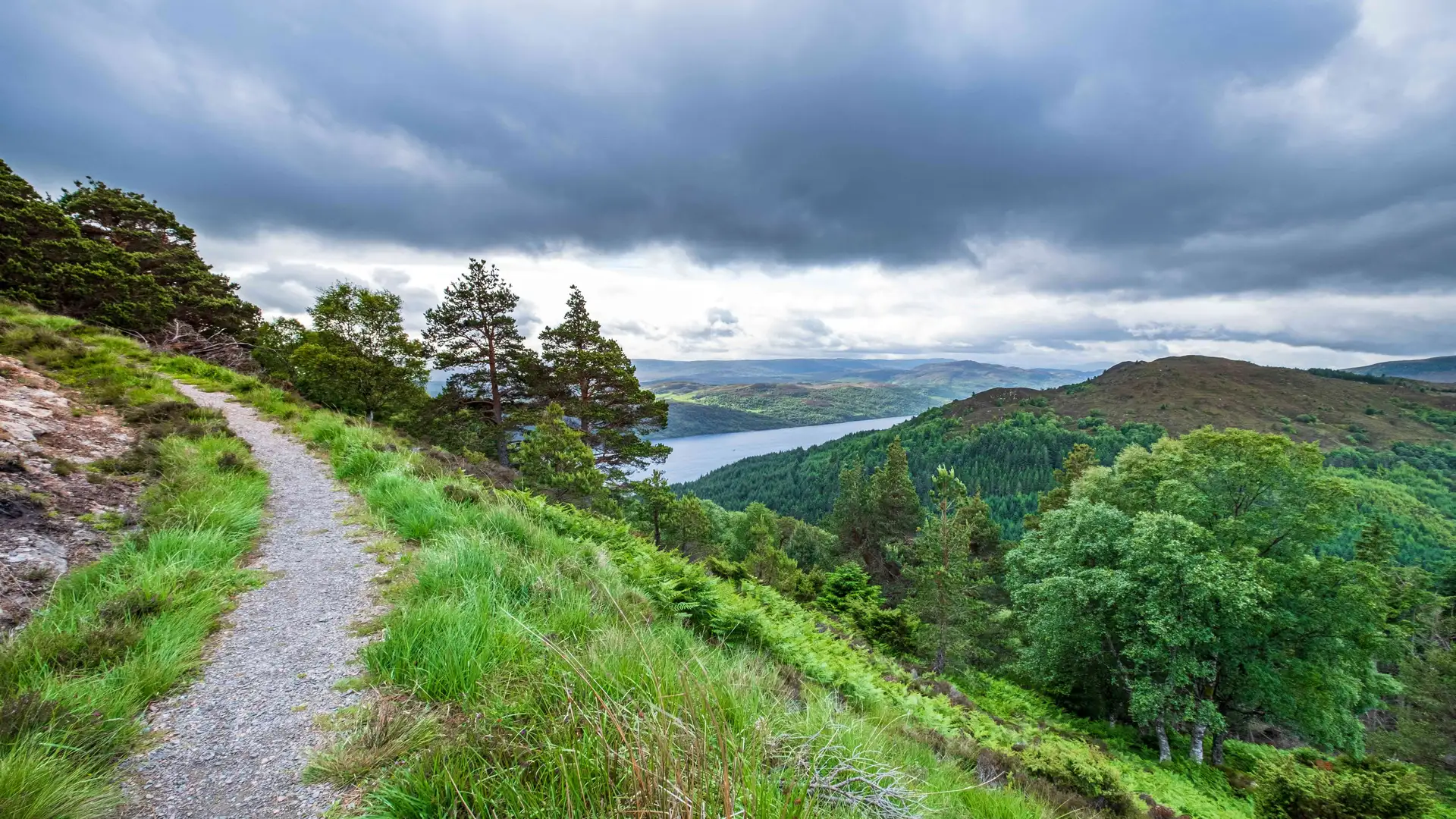
This is a landscape of scale and exposure. Glens stretch for miles between high ridgelines, sea lochs cut deep into the land, and broad moorland plateaus open under wide skies. Routes follow old drove roads, military tracks, and lochside paths, rising gradually into passes before descending again towards small settlements and isolated inns. Distances feel longer here, and progress is shaped by light, weather, and terrain rather than the map alone.
Much of the Highlands’ character comes from its protected and undeveloped land. Cairngorms National Park safeguards vast upland plateaus, native Caledonian pine forest, and high corries, while Loch Lomond and The Trossachs National Park protects lochs, wooded hills, and the southern gateway to the region. Beyond these parks, large areas of moor, glen, and coastline remain lightly settled, giving many routes a strong sense of remoteness and continuity.
Movement through the Highlands often follows natural corridors. The Great Glen cuts diagonally across the country along a geological fault line, guiding both the Great Glen Way and a chain of lochs including Loch Lochy and Loch Ness. To the west, mountains gather around Glen Coe and Lochaber, where paths thread between steep-sided valleys and beneath high summits such as Ben Nevis. Further north and west, places like Glen Affric and Wester Ross offer quieter trails through forest, ridge, and shoreline.
Walking here is defined by rhythm and immersion. Long lochside stretches alternate with steady climbs, forest tracks open onto wide views, and small villages appear after extended sections of open land. The experience feels elemental and spacious, encouraging multi-day journeys through country that changes slowly and dramatically at the same time.
This is a region best understood step by step: beside still lochs, across open moor, and through deep glens where weather, rock, and water shape every route.
Routes & Landscapes Across the Region
The West Highland Way runs from Milngavie to Fort William, crossing moorland, lochside paths, and Highland passes beneath Ben Nevis and through Loch Lomond and The Trossachs National Park.
The Great Glen Way links Fort William and Inverness along the Great Glen, following canal paths, forest tracks, and elevated viewpoints above Loch Lochy, Loch Oich, and Loch Ness.
Within Cairngorms National Park, routes around Aviemore, Rothiemurchus, and Glenmore combine native pinewoods, rivers, and open upland terrain.
Glen Affric and surrounding western glens provide quieter woodland and mountain trails framed by lochs and high ridges.
Areas of the Highlands
Lochaber, Inverness-shire, Badenoch and Strathspey, Wester Ross, Sutherland, and the Great Glen each offer distinct combinations of mountain, forest, coastline, and glen, providing natural bases for longer regional journeys.
Beginning to explore the Highlands
The Highlands form a connected network of trails, national parks, glens, and lochs rather than a single destination. Following these routes reveals a landscape shaped by geology and weather, where travel feels immersive, spacious, and closely tied to the land itself.
Frequently Asked Questions
What defines walking in the Highlands?
Long-distance trails, lochside paths, mountain passes, forest tracks, and open moorland linking villages and remote glens.
Are there long-distance routes in the region?
Yes. The West Highland Way and Great Glen Way are two of Scotland’s best-known multi-day trails.
Is the terrain challenging?
Routes range from moderate lochside and canal paths to more demanding mountain and upland sections with rougher ground and changing weather.
Are there protected landscapes?
Yes. The region includes Cairngorms National Park and Loch Lomond and The Trossachs National Park, along with extensive wild and sparsely settled land.
Can routes be linked together?
Yes. Many trails connect through towns such as Fort William, Aviemore, and Inverness, allowing longer journeys across multiple glens and landscapes.