
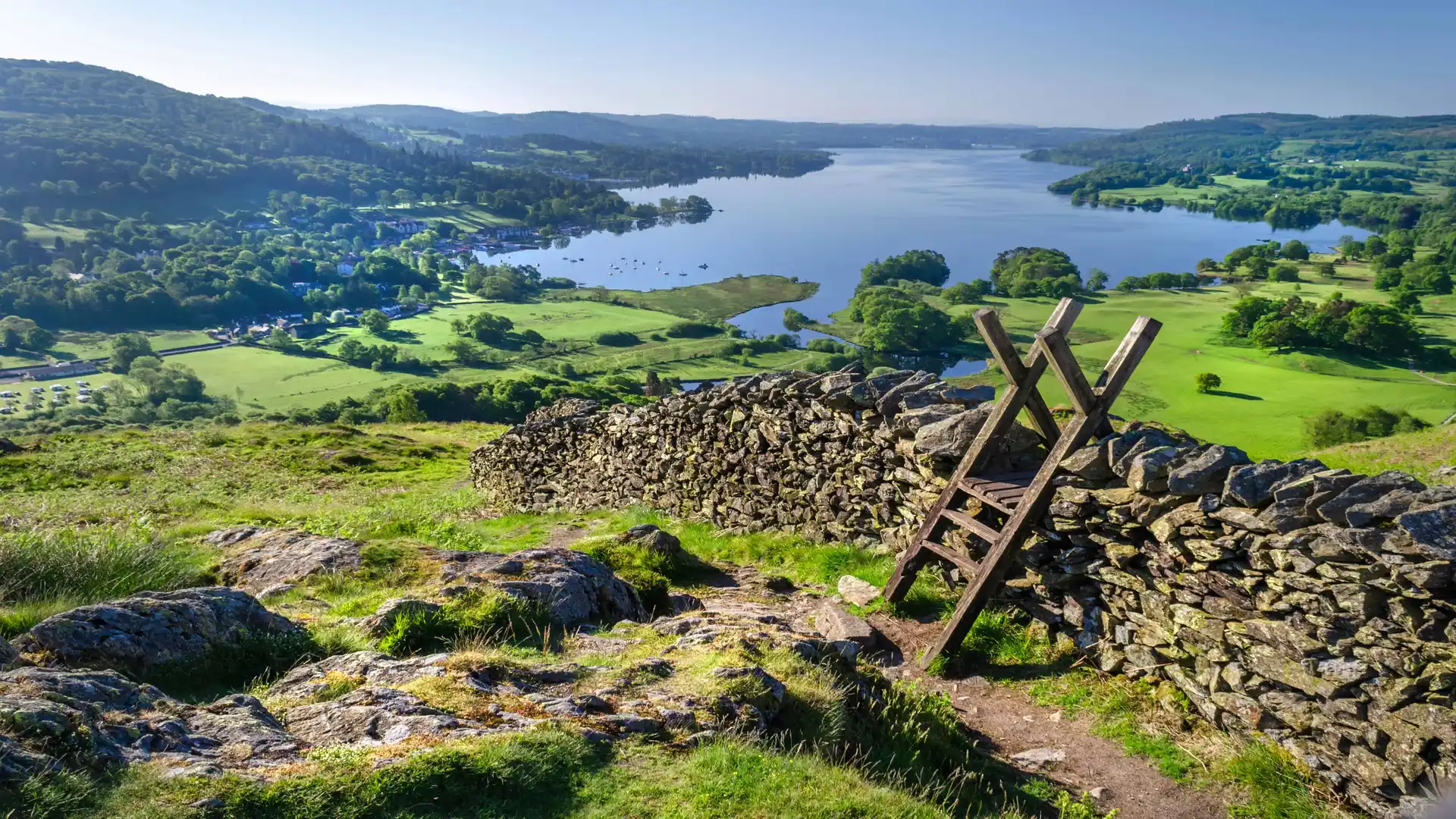
Cumbria – Mountains, Lakes, and Open Fell Country
High mountains, deep valleys, and exposed uplands between the Irish Sea and the Pennines
Mountain ranges, glacial lakes, and open fells shape Cumbria, where walking routes follow the Lake District National Park, the Cumbria Way, the Coast to Coast Path, and the Pennine Way between Keswick, Ambleside, Windermere, Coniston, and Carlisle.
Much of the terrain is varied and often uneven underfoot. Stone-pitched paths, bridleways, upland tracks, and lakeside trails move between valley floors and higher passes, with sustained climbs and rocky sections rather than level walking.
The landscape shifts across the county. The central Lake District contains the highest fells and narrow glacial valleys with clustered lakes, while the Eden Valley provides lower farmland and gentler ground. West Cumbria becomes coastal with dunes and cliffs, and the eastern edge rises into open Pennine moorland.
Towns and villages sit along valleys and lake edges, creating regular access points for shorter walks and longer point-to-point routes.
Trails and Routes Through Cumbria
Cumbria Way
A north–south route from Ulverston to Carlisle passing through the central Lake District via valleys, passes, and lakeside paths.
Coast to Coast Path
Runs west to east from St Bees Head across the Lake District fells toward the Pennines and North Yorkshire.
Pennine Way
Follows high moorland and escarpment terrain along Cumbria’s eastern boundary.
Allerdale Ramble
Connects the coast at Seaton with Keswick through lowland farmland and the northern Lake District foothills.
Walking Character
• High mountain fells and ridgelines
• Glacial lakes and steep valleys
• Moorland and open common land
• Rocky and stone-pitched paths
• Valley towns and lakeside villages
• Remote upland terrain