
Cart
0
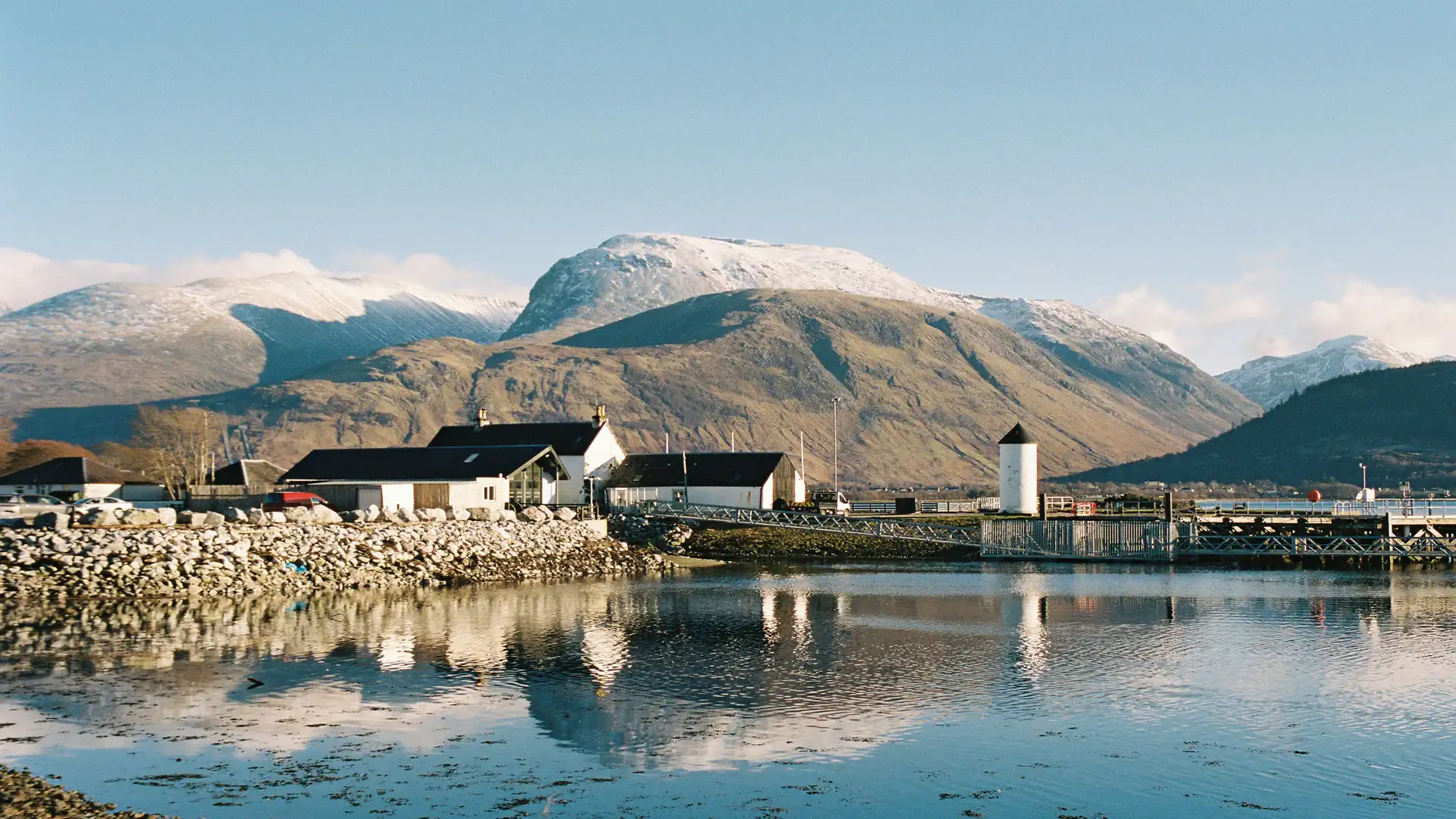
View across Lochaber towards Ben Nevis and Fort William, Scotland’s Outdoor Capital, with reflections on calm water under clear skies.

Inverness-shire – Mountains, Glens, and Long Lochs

A large Highland area of mountain massifs, deep valleys, and freshwater loch corridors across the central Highlands

Inverness-shire is a Highland area of mountain ranges, glens, and long lochs in northern Scotland. Walking routes cross the Cairngorms National Park, follow the Great Glen Way, the West Highland Way, and the Affric Kintail Way, and link places such as Inverness, Fort William, Aviemore, Kingussie, and Drumnadrochit across upland plateaus, forested slopes, and glen floors.

Much of the terrain is varied and often rough underfoot. Hill paths, estate tracks, forest roads, and sections of open hillside dominate, with sustained climbs onto passes and ridges common. Lower sections along lochs and rivers provide steadier progress on firmer ground, but gradients are generally longer and more continuous than lowland counties.

The landscape shifts between distinct areas. The east includes the high plateaus and rounded summits of the Cairngorms. The central corridor follows the Great Glen, where Loch Ness and other long lochs create level linear routes between settlements. To the west and south-west, ground becomes steeper and more mountainous toward Glen Nevis and the Mamores, with narrow glens and higher relief.

Settlements are widely spaced, with larger towns acting as base points separated by long stretches of open ground. This spacing supports both multi-day linear routes and shorter loops without frequent road or urban interruption.

Trails and Routes Through Inverness-shire

Great Glen Way

A long-distance route running from Fort William to Inverness, following canal towpaths, forest tracks, and hillside paths along Loch Linnhe, Loch Oich, and Loch Ness.

West Highland Way

A long-distance route from Milngavie to Fort William, entering the county through Glen Nevis and finishing beneath Ben Nevis on mountain and glen terrain.

Affric Kintail Way

A cross-country route linking Drumnadrochit with Morvich, passing through Glen Affric on estate tracks and remote Highland glens.

Speyside Way (southern section)

A long-distance route connecting Aviemore and Kingussie through river valley and woodland terrain at the edge of the Cairngorms.

Local estate and forest paths

Networks of tracks and waymarked routes around Glenmore, Rothiemurchus, and Loch Ness used for shorter circular walking.

Walking Character

  • High mountain plateaus and rounded summits
  • Deep glens and long freshwater lochs
  • Estate tracks, forest roads, and hill paths
  • Sustained climbs and extended distances between settlements
  • Large-scale, sparsely populated terrain
  • Predominantly inland and upland

Frequently Asked Questions

Where is Inverness-shire located?
Inverness-shire lies in the central Scottish Highlands, extending from the Great Glen east into the Cairngorms and west toward Lochaber.
What defines walking here?
Mountain and glen walking dominates, with long routes following loch corridors or crossing high passes and upland plateaus.
Are there long-distance routes here?
Yes. The Great Glen Way, West Highland Way, Affric Kintail Way, and parts of the Speyside Way all pass through the area.
Is the terrain steep?
Often. Expect sustained climbs, rougher paths, and longer distances between services compared with lowland or coastal regions.
When is the best time to visit?
Late spring to early autumn provides longer daylight and firmer ground. Winter conditions can include snow, ice, and limited access on higher routes.