
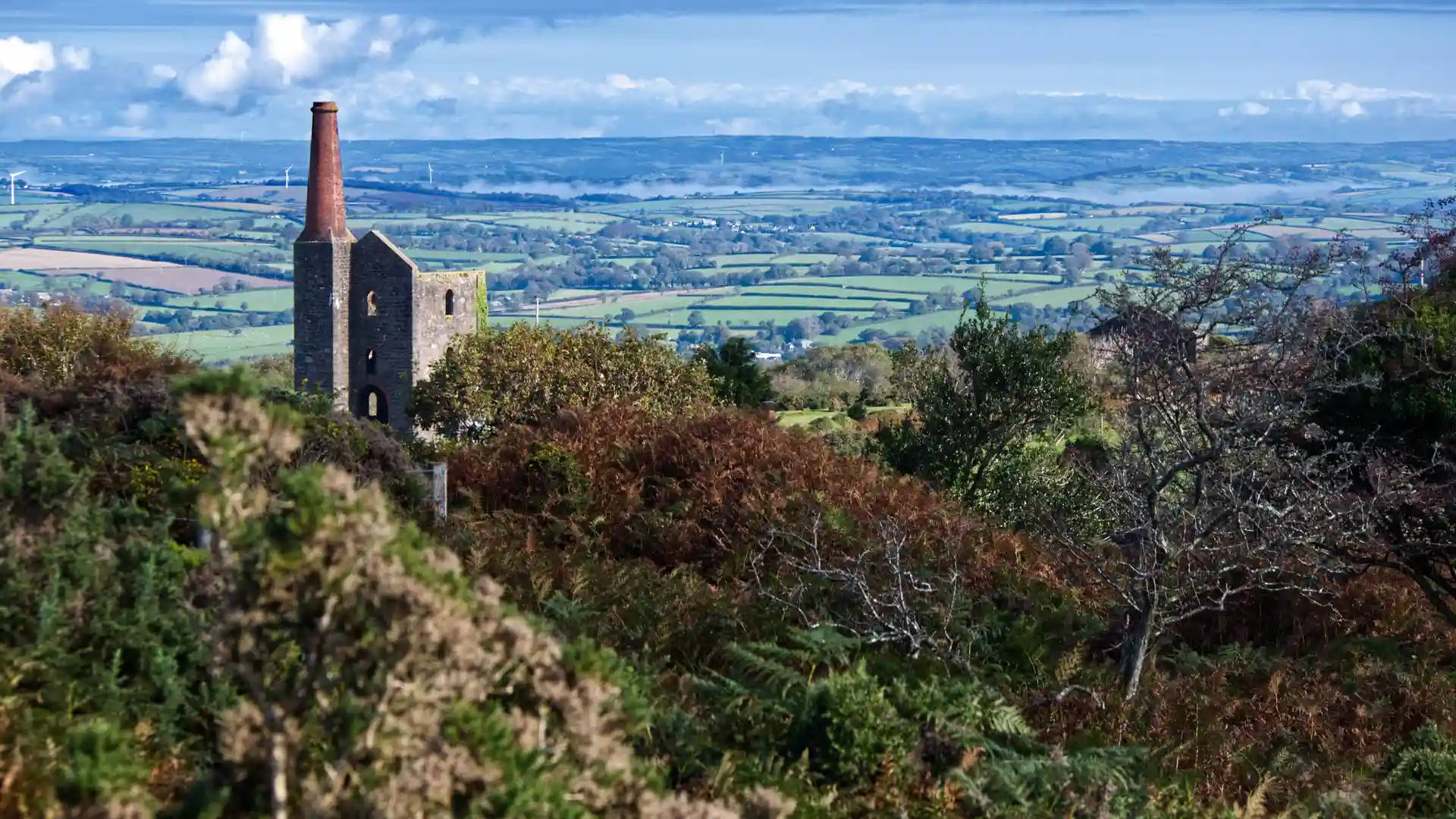
Cornwall & West Devon Mining Landscape UNESCO World Heritage Site – Engine Houses, Moorland Routes, and Atlantic Cliffs
Industrial Heritage, Open Moorland, and Coastal Mining Trails
The Cornwall & West Devon Mining Landscape is one of England’s most distinctive places for self-guided travel, shaped by walking routes, varied landscapes, and small historic places scattered between rugged Atlantic cliffs, open moorland, and wooded river valleys. Sections of the South West Coast Path, the Mineral Tramways, and numerous local paths link engine houses, former mine workings, harbours, and villages such as St Just, St Agnes, Hayle, and the Tamar Valley, allowing walkers to move gradually through a landscape where industry and countryside are inseparable.
Rather than a single site, the UNESCO designation covers ten separate areas across Cornwall and West Devon. Clifftop paths pass abandoned engine houses set above the sea, inland routes cross Bodmin Moor’s open ridges and granite outcrops, and quiet valley tracks follow rivers once used to power mines and mills. The terrain shifts constantly between coast, moor, and woodland, giving each section a different character.
Walking here feels layered and atmospheric. Stone ruins sit against wide skies, mine stacks rise unexpectedly from heath and grassland, and harbours and cottages remain part of everyday life. The landscape is both historic and lived-in, where the marks of industry remain embedded in the land rather than preserved behind barriers.
About the UNESCO World Heritage Site
The Cornwall & West Devon Mining Landscape was inscribed as a UNESCO World Heritage Site in 2006 for its global importance in the development of tin and copper mining. From the eighteenth to nineteenth centuries, this region led advances in mining technology, engineering, and transport, exporting expertise around the world.
Today, engine houses, tramways, quays, miners’ cottages, and abandoned workings remain visible across the countryside. Together they form a rare cultural landscape where settlement, industry, and terrain evolved side by side. Walking through the area reveals how deeply mining shaped both the land and the communities that depended on it.
Where to Walk
South West Coast Path (Mining Sections)
Clifftop walking near St Just, Botallack, St Agnes, and Porthtowan, with engine houses set dramatically above the Atlantic.
Mineral Tramways Trails
A largely traffic-free network following former industrial railways between Portreath and Devoran, offering gentle gradients and wide open views.
Tamar Valley Paths
Wooded riverside routes linking orchards, quays, and historic mining settlements along the Cornwall–Devon border.
Caradon Hill & Bodmin Moor
Open moorland tracks connecting quarries, mine remains, and expansive upland viewpoints.
Highlights
- Cliff-top engine houses at Wheal Coates, Botallack, and Levant
- A UNESCO-listed industrial landscape spread across coast, moorland, and valley
- Former tramways repurposed as quiet walking and cycling routes
- Historic harbour towns including Charlestown and Hayle
- Wide Atlantic views, granite uplands, and wooded river valleys
- A rare combination of heritage and open countryside