
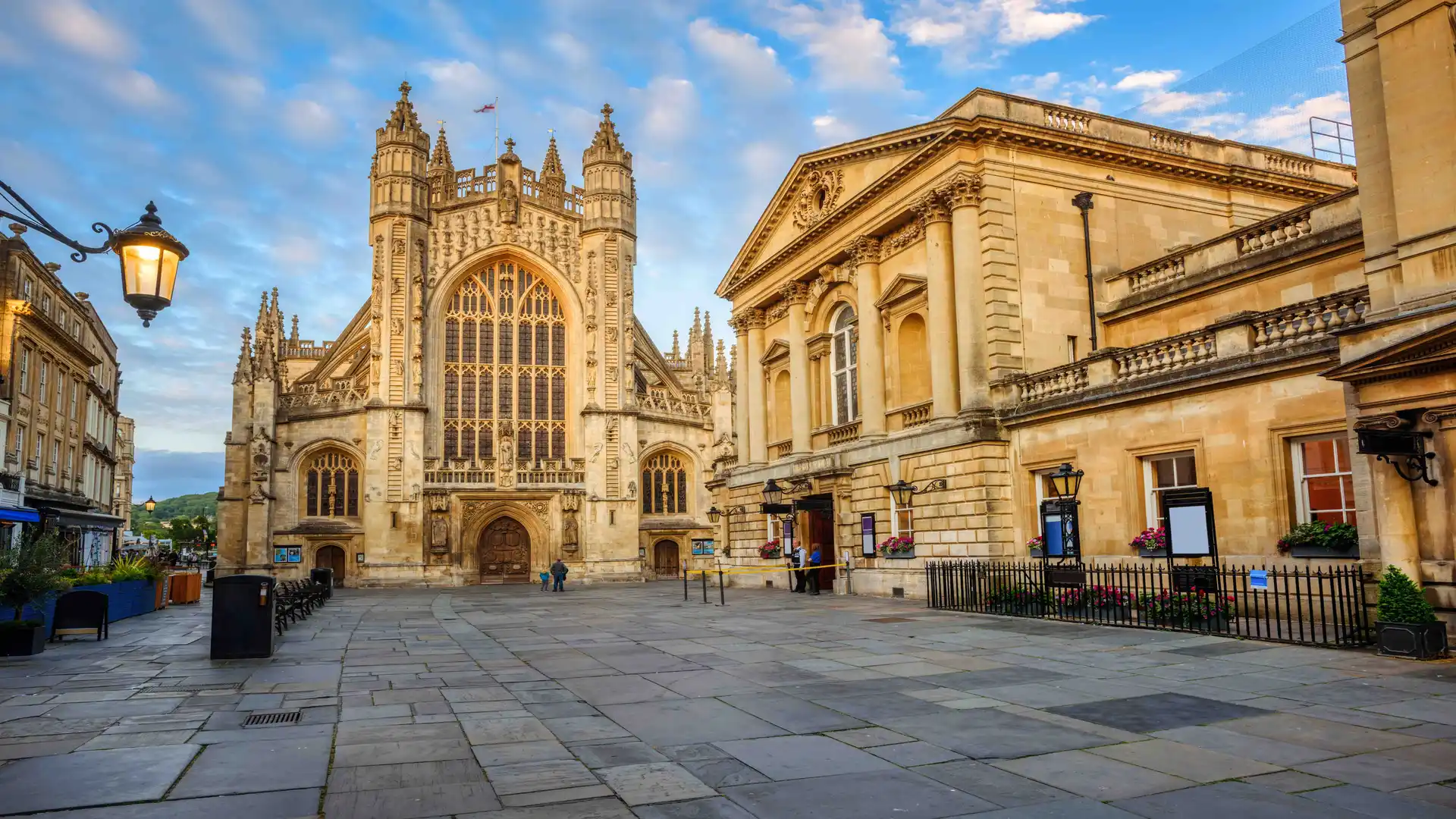
City of Bath UNESCO World Heritage Site – Roman Baths, Georgian Crescents, and Hillside Paths
Honey-Coloured Stone, Riverside Walks, and Encircling Hills
The City of Bath is one of England’s most distinctive places for self-guided travel, shaped by walking routes, historic streets, and surrounding landscapes that connect the River Avon with the wooded hills and open countryside beyond. Footpaths and long-distance trails link the compact city centre with the Bath Skyline Walk, the Cotswold Way, and the Kennet & Avon Canal, allowing walkers to move gradually between Roman ruins, Georgian terraces, and the wider Somerset landscape.
Set within a natural bowl of hills, Bath is defined as much by its setting as by its architecture. Honey-coloured limestone crescents curve along the slopes, narrow streets descend toward the river, and green ridges rise immediately beyond the rooftops. Walking here shifts easily between urban streets and open countryside, with steady climbs rewarded by wide views back across the city.
Despite its international reputation, Bath remains calm and walkable at ground level. Riverside paths, canal towpaths, and woodland tracks provide quieter alternatives to the main streets, revealing how closely the city and landscape are connected. Exploring on foot makes the relationship between spa town, river valley, and surrounding hills easy to understand.
About the UNESCO World Heritage Site
Bath was inscribed as a UNESCO World Heritage Site in 1987 for its exceptional Roman remains, Georgian architecture, and historic spa culture, and was later included within the wider Great Spa Towns of Europe designation. The city preserves layers of history that span nearly two thousand years, from Roman bathing complexes to eighteenth-century urban planning.
Unlike many historic cities, Bath’s significance lies not only in individual buildings but in the unity of its layout, architecture, and natural setting. Streets, crescents, parks, and hillsides were designed together, creating a coherent landscape where city and countryside meet.
Today, public paths, parks, and surrounding trails allow walkers to experience both the historic centre and its wider setting on foot.
Where to Walk
Bath Skyline Walk
A circular National Trust route across the wooded hills above the city, with meadows, valleys, and panoramic views over Bath.
Cotswold Way (southern section)
The National Trail begins or ends in Bath, leading north along limestone ridges through the Cotswolds.
Kennet & Avon Canal Path
Flat, waterside walking east from the city centre along a historic towpath past locks, aqueducts, and quiet villages.
Two Tunnels Greenway
A traffic-free route through former railway tunnels and open countryside linking Bath with Midford and the surrounding valley.
Highlights
- Roman Baths and Bath Abbey at the centre of the historic city
- Georgian architecture including the Royal Crescent, The Circus, and Pulteney Bridge
- A UNESCO-listed city set within a natural bowl of hills
- The Bath Skyline Walk with wide views across the Avon valley
- Canal and riverside paths providing gentle, level walking
- Direct access to the Cotswold Way National Trail