
Jurassic Coast UNESCO World Heritage Site – Cliffs, Fossil Shores, and Deep Time Landscapes
Cliffs, Fossil Shores, and 185 Million Years of Deep Time
The Jurassic Coast on England’s south coast is one of the country’s most distinctive places for self-guided travel, shaped by walking routes, open coastal landscapes, and small seaside places linked along a continuous stretch of shoreline between Exmouth, Lyme Regis, West Bay, Lulworth Cove, Swanage, and Studland. The South West Coast Path runs the full length of the UNESCO site, connecting clifftop tracks, beaches, headlands, and harbours, allowing walkers to experience the coast gradually rather than as isolated viewpoints.
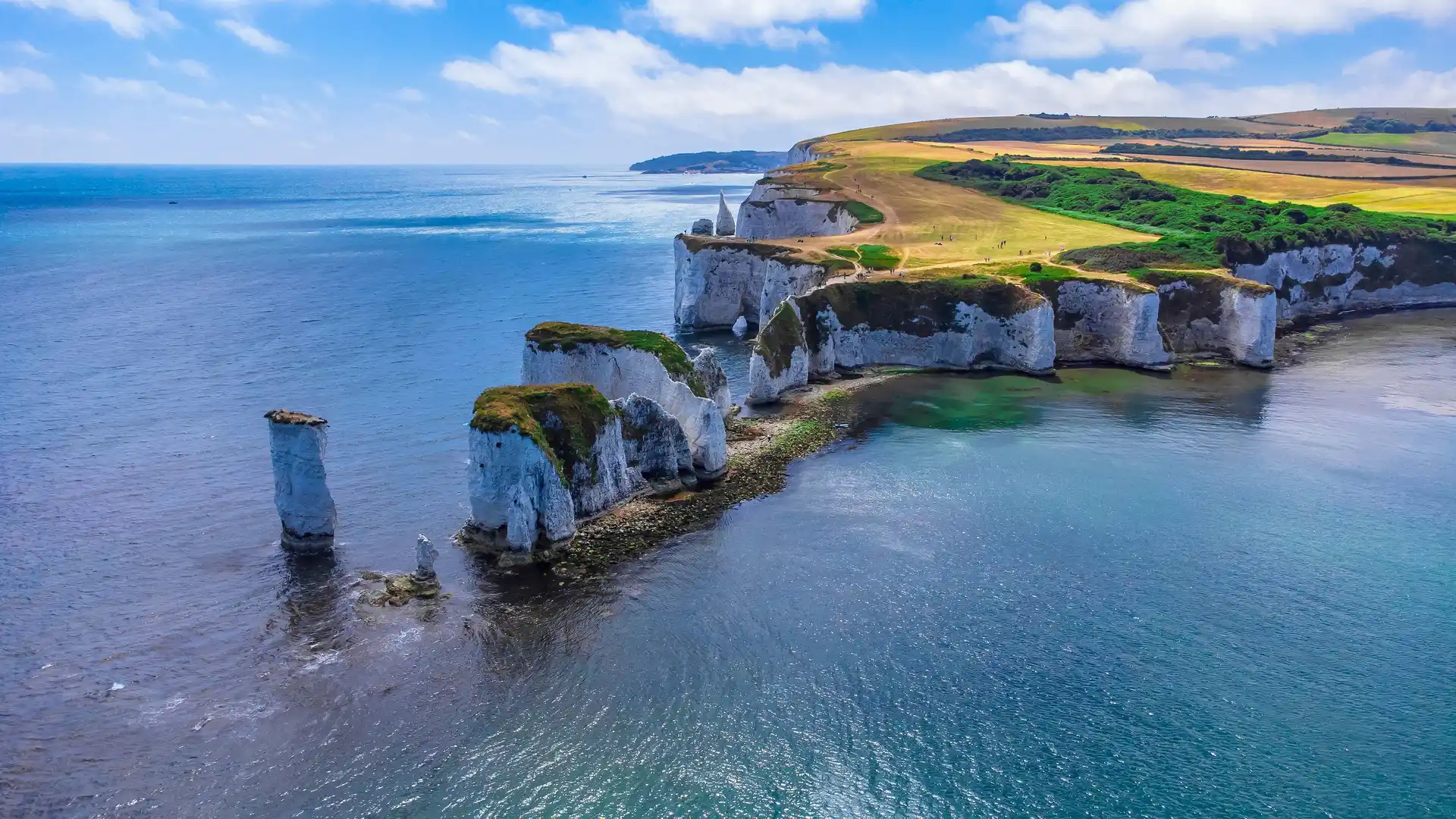
Stretching for 95 miles through East Devon and Dorset, the landscape is defined by high cliffs, landslips, fossil-rich shores, and wide sea horizons. Each section has a distinct character: red sandstone around Exmouth, limestone arches near Durdle Door, chalk stacks at Old Harry Rocks, and long shingle or sand beaches between small coves and bays. Walking here means steady climbs and descents, exposed headlands, and frequent shifts between open coast and sheltered valleys.
Despite its international recognition, the Jurassic Coast feels best understood slowly. Light changes constantly across the cliffs and sea, storms reshape the shoreline, and new fossils appear after each tide. The relationship between land and water is never static, giving every walk a slightly different character.
About the UNESCO World Heritage Site
The Jurassic Coast was inscribed as a UNESCO World Heritage Site in 2001 for its exceptional geological value. The cliffs reveal an almost continuous record of 185 million years of Earth’s history, from the Triassic through the Jurassic and into the Cretaceous, making it one of the most important natural archives of its kind anywhere in the world.
Unlike landscapes defined primarily by human history, this coastline tells a story written in rock layers, erosion, and time. Fossils, landslides, and exposed strata provide visible evidence of ancient seas and extinct life, giving the coast both scientific significance and a strong sense of deep time.
Today, protected access and maintained paths allow walkers to experience this evolving environment while preserving its fragile geology for the future.
Where to Walk
South West Coast Path (Jurassic Coast Section)
A continuous clifftop route following the full length of the site, linking Devon and Dorset through some of England’s most dramatic coastal scenery.
Lyme Regis to Charmouth
A shorter coastal stretch beside fossil-rich beaches and lower cliffs, offering easier terrain and direct access to the shoreline.
Lulworth Cove to Durdle Door
A compact but iconic section connecting two of the coast’s most recognisable limestone formations.
West Bay to Burton Bradstock
Open walking above golden sandstone cliffs and wide beaches with expansive views.
Studland Bay & Old Harry Rocks
Gentler paths across heathland and chalk headlands overlooking Poole Bay.
Highlights
- A 95-mile UNESCO-listed coastline shaped by deep geological time
- Continuous access via the South West Coast Path
- Fossil-rich beaches and exposed rock layers spanning 185 million years
- Iconic formations including Durdle Door, Lulworth Cove, Golden Cap, and Old Harry Rocks
- Traditional seaside towns, small harbours, and quiet coves
- Strong rail and bus links supporting car-free walking