
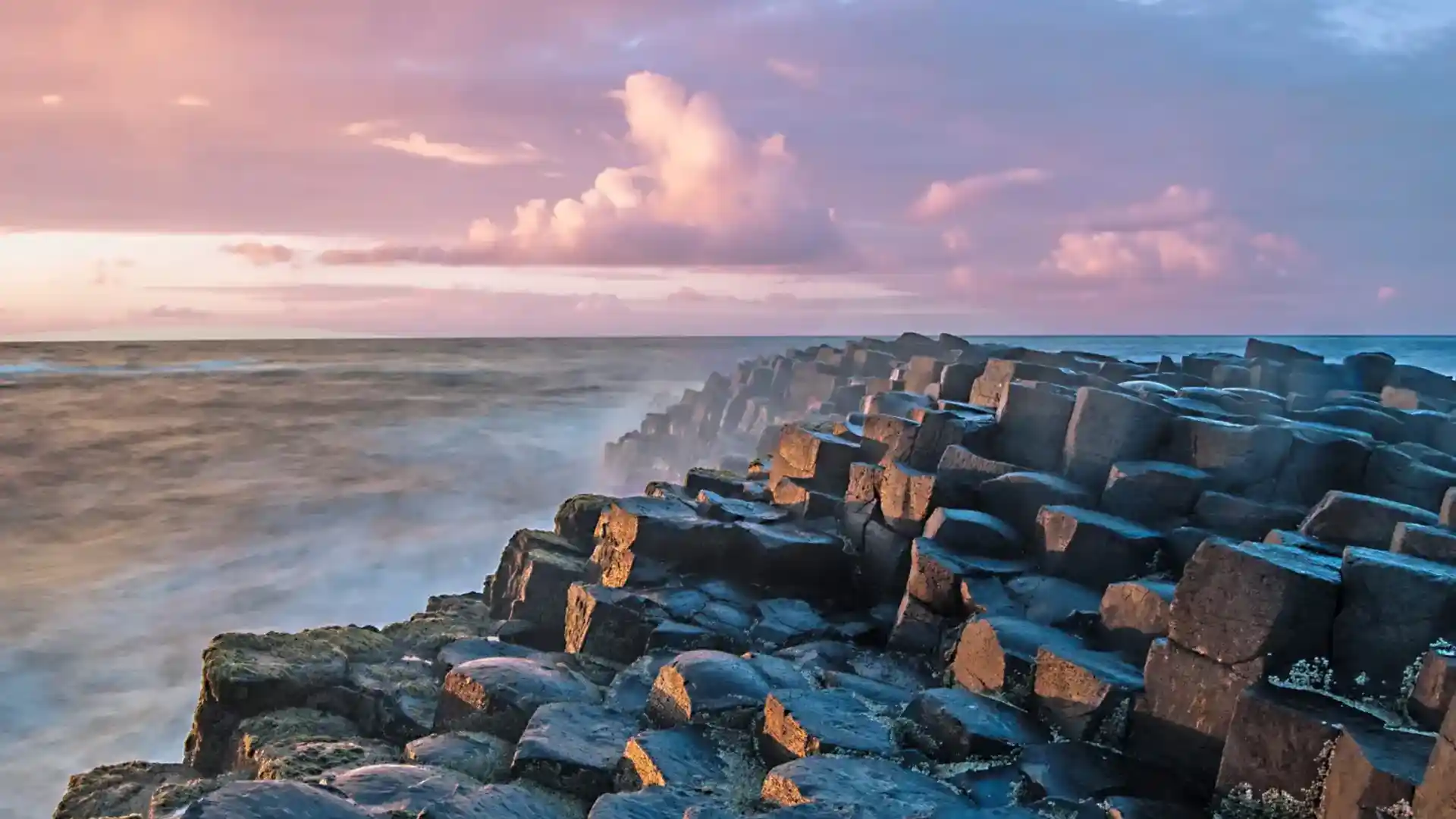
Giant’s Causeway UNESCO World Heritage Site – Basalt Columns, Clifftop Routes, and Atlantic Geology
Volcanic Stone, Atlantic Cliffs, and Coastal Legend
The Giant’s Causeway on Northern Ireland’s Causeway Coast is one of the most distinctive places for self-guided travel, shaped by walking routes, coastal landscapes, and small seaside places along the Atlantic edge of County Antrim. Long-distance paths such as the Causeway Coast Way and sections of the Ulster Way connect the famous basalt columns with clifftop trails, beaches, and nearby villages including Bushmills, Ballintoy, and Portrush, allowing visitors to explore the wider coastline on foot rather than simply stopping at a viewpoint.
Formed by volcanic activity around 60 million years ago, more than 40,000 interlocking basalt columns step down into the sea, creating one of the most unusual natural landscapes in Europe. The geometry of the stones, the constant movement of the Atlantic, and the sweep of open headlands combine to make walking here feel elemental and exposed. Clifftop paths rise above crashing surf before descending to quiet coves and rocky shores, with views stretching far along the Antrim Coast.
Despite its fame, the Causeway is best understood slowly. Early morning or late afternoon light softens the stone and empties the paths, and short climbs onto the surrounding headlands reveal how the columns sit within a much larger coastal system of cliffs, farmland, and small settlements. The landscape feels both ancient and lived-in — shaped by geology, weather, and generations of coastal life.
About the UNESCO World Heritage Site
The Giant’s Causeway was designated a UNESCO World Heritage Site in 1986 for its outstanding geological importance. The columns were created when thick lava flows cooled and fractured into distinctive polygonal shapes, producing one of the world’s clearest examples of volcanic basalt formation.
Beyond science, the site carries deep cultural meaning. Local folklore tells of the giant Finn McCool building a stone causeway across the sea to Scotland — a story that remains part of the character of the place today. Together, geology and legend give the landscape a rare combination of physical drama and narrative identity.
Managed by the National Trust, the area is carefully protected while remaining fully accessible to walkers, with maintained paths linking the stones to the wider Causeway Coast.
Where to Walk
Causeway Coast Way
A long-distance coastal route passing directly through the site, following cliffs, beaches, and headlands between Portstewart and Ballycastle.
Giant’s Causeway Cliff Walks
Shorter circular and linear paths above the columns, offering elevated views of the Atlantic and the hexagonal formations below.
Ulster Way (Northern Section)
Part of Northern Ireland’s long-distance trail network, connecting the Causeway Coast with inland hills and broader regional routes.
Runkerry Head & Portballintrae Paths
Quieter stretches of coastline north and west of the visitor centre, ideal for gentler walks away from the busiest sections.
Highlights
- Over 40,000 interlocking basalt columns formed by ancient lava flows
- Dramatic clifftop paths with constant Atlantic views
- A rare combination of geology, folklore, and living coastal culture
- Easy connections to Bushmills, Ballintoy Harbour, and Dunluce Castle
- Managed access and well-maintained walking routes
- Excellent base for exploring the wider Causeway Coast on foot