
South Wales – Valleys, Coastal Cliffs, and Riverside Greenways
Valley rivers, sea cliffs, and high moorland shaped by water, industry, and time
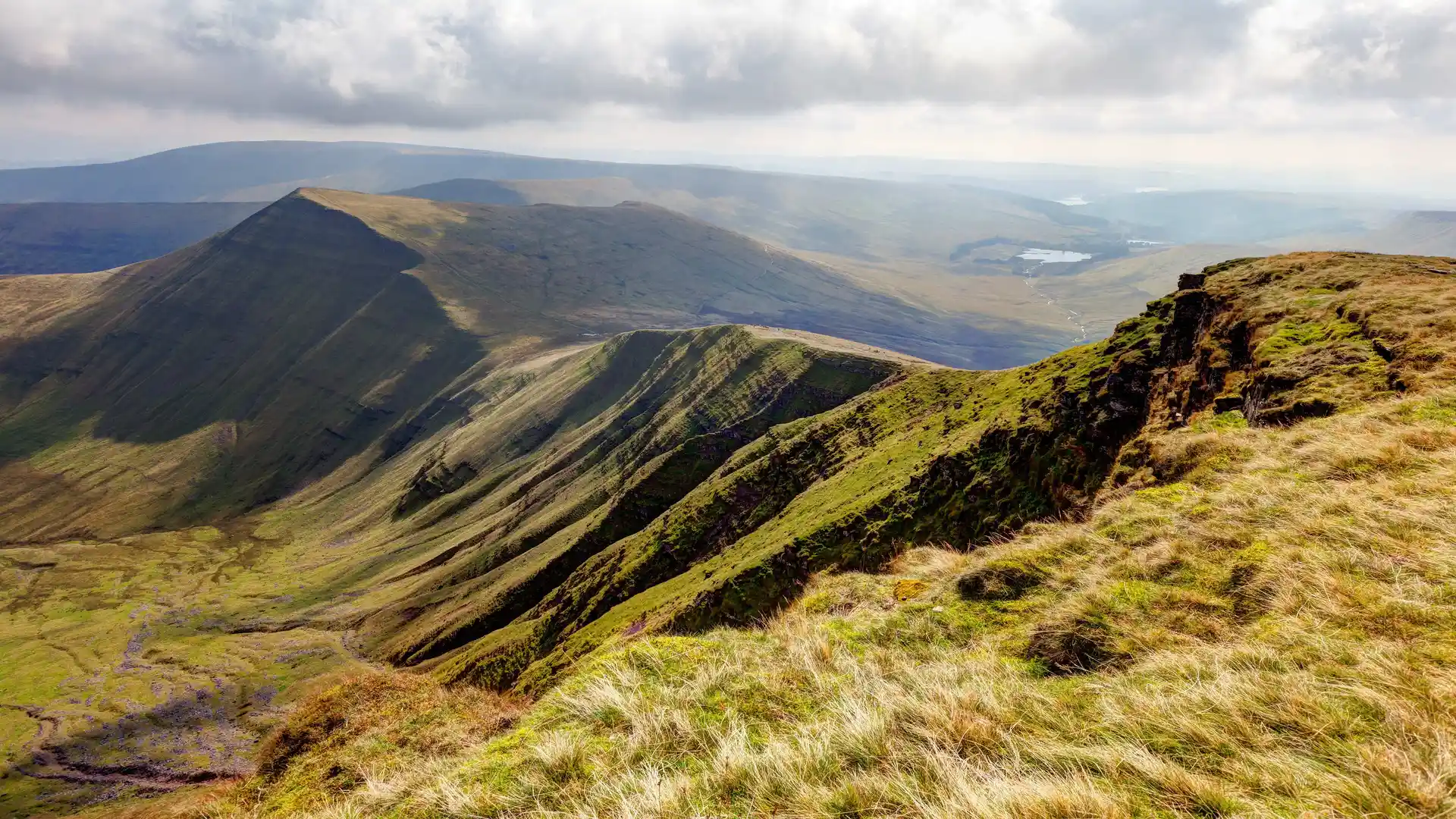
South Wales is shaped by its walking routes, coastal edges, and broad valley landscapes, where paths follow the Wales Coast Path along the Glamorgan Heritage Coast, climb into Brecon Beacons National Park, and trace former railway and canal corridors through the Taff and Afan valleys. Towns including Cardiff, Merthyr Tydfil, Brecon, and Swansea sit naturally along these lines of movement, creating a region where coast, river, woodland, and upland connect in steady succession.
The terrain shifts quickly over short distances. Limestone cliffs and wave-cut platforms line the Bristol Channel, while inland the land folds into wooded valleys and open ridges that rise towards the Beacons plateau. Water shapes many journeys: the Taff, Usk, and Afan guide long, level routes through recovering industrial landscapes now softened by forest and meadow.
Large areas of the region are protected. The uplands of Brecon Beacons National Park safeguard high moor, waterfall gorges, and reservoir valleys, while the Gower National Landscape preserves dunes, headlands, and sandy bays along the peninsula west of Swansea. To the east, wooded river corridors within the Wye Valley National Landscape provide quieter gorge and hillside walking near the English border. Around Blaenavon, the Blaenavon Industrial Landscape UNESCO World Heritage Site adds another layer, where upland paths pass ironworks, canals, and mining remains embedded within the hills.
Movement often follows historic lines. The Taff Trail links Cardiff with the Beacons along old railbeds and riversides, the Wales Coast Path traces continuous shoreline between estuary and headland, and forestry tracks and valley lanes connect former mining communities across the interior. These intersecting routes make it easy to combine coastal, valley, and upland sections into longer, flexible journeys.
This is a region best understood step by step: along clifftops above the Bristol Channel, beside river and canal, and across open moor where the valleys rise into the hills.
Routes & Landscapes Across the Region
The Glamorgan Heritage Coast forms one of the most rugged stretches of the Wales Coast Path, with clifftop walking between Ogmore-by-Sea and Llantwit Major.
The Taff Trail follows riverside paths and former railway lines from Cardiff through Pontypridd and Merthyr Tydfil towards the Brecon Beacons foothills.
Trails within Afan Forest Park explore woodland hillsides, old industrial routes, and elevated viewpoints above the Afan Valley.
The Usk Valley Walk traces the River Usk through farmland, woodland, and historic towns on gentler ground to the east.
Areas of South Wales
The Glamorgan coast, the South Wales Valleys, the Usk Valley, and wooded uplands around Afan and the western valleys each offer distinct combinations of coast, river, forest, and settlement, providing natural bases for linking inland and shoreline routes.
Beginning to explore South Wales
South Wales forms a connected web of coastal paths, greenways, and valley tracks rather than a single focal landscape. Following these routes reveals a region shaped by water, industry, and recovery, where travel feels grounded, varied, and closely tied to place.
Frequently Asked Questions
What defines walking in South Wales?
Clifftop coastal paths, riverside greenways, valley tracks, and woodland routes linking towns and former industrial landscapes.
Are there long-distance routes in the region?
Yes. The Taff Trail, Wales Coast Path, and Usk Valley Walk provide multi-day options.
Is the terrain challenging?
Valley floors and coastal sections are generally moderate, with steeper climbs where routes cross between valleys.
Are there protected or heritage landscapes?
Yes. The Glamorgan Heritage Coast and several forest parks and restored valley environments safeguard important habitats and historic sites.
Can routes be linked together easily?
Yes. Trails intersect frequently and many towns lie directly on the route network, allowing flexible stages.