
Ireland’s South and East Coast – Cliffs, Harbours, and Coastal Paths
Sea light, sheltered bays, and long coastal paths shaped by tide, stone, and settlement
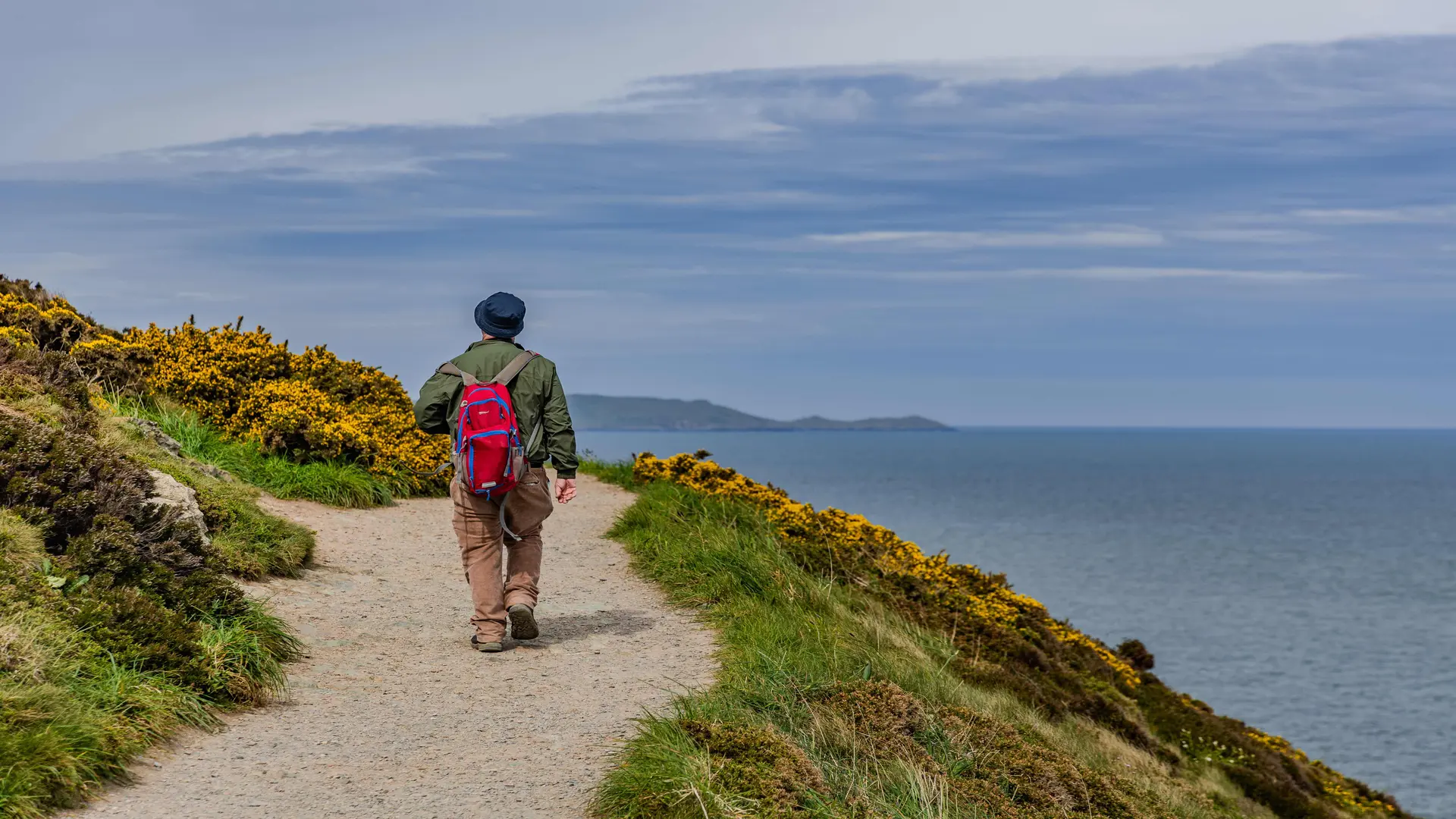
Ireland’s South and East Coast is defined by self-guided travel, walking routes, varied coastal landscapes, and the places connected by them. Paths such as the Copper Coast between Tramore and Dungarvan, the Howth Cliff Walk near Dublin, and links into Wicklow Mountains National Park connect harbour towns, beaches, headlands, and wooded slopes, creating one of Ireland’s most accessible regions for steady movement between sea, village, and upland.
This coastline feels softer and more sheltered than the Atlantic west. Light reflects off wide bays and sandy strands, while low cliffs, coves, and working harbours shape a gentler edge to the island. Routes often follow old shoreline tracks, promenades, and quiet backroads, passing fishing piers, stone walls, and colourful terraces where settlement sits close to the water.
Geology defines much of the character. The stretch between Tramore and Dungarvan forms Copper Coast UNESCO Global Geopark, where folded cliffs, sea stacks, coves, and former mining sites reveal hundreds of millions of years of earth history. Here, coastal paths rise and fall above the sea, offering long views across open water and quieter sections of shoreline that feel remote despite their proximity to towns.
Further north, wooded slopes and heath meet the coast around Wicklow, where routes climb gradually from beaches and harbours towards forest and upland. These paths link naturally with inland trails, allowing longer journeys that move between sea level and hillside in a single day. Around Dublin Bay and the Howth Peninsula, compact cliff loops combine open sea views with easy access, creating shorter walks shaped by headland, lighthouse, and harbour life.
Progress along this coast is generally moderate. Gradients are manageable, distances flexible, and towns appear regularly, offering natural pauses. Cafés, piers, beaches, and small harbours break the day into stages, giving the region a relaxed, unhurried rhythm well suited to slower travel.
This is a coastline best understood step by step: along cliff edges, between coves, and through settled places where land and sea remain closely connected.
Routes & Landscapes Across the Region
The Copper Coast follows the cliffs and coves of Copper Coast UNESCO Global Geopark between Tramore and Dungarvan, combining geological landmarks, old mining heritage, and open sea views.
The Howth Cliff Walk loops around the peninsula north of Dublin, passing seabird colonies, steep cliffs, and the Baily Lighthouse, with constant views across Dublin Bay.
Coastal paths between Arklow and Wicklow link beaches, harbour fronts, and wooded slopes, connecting directly with inland routes through Wicklow Mountains National Park and the Wicklow Way.
Additional shoreline and greenway sections around Wexford and Waterford provide level, traffic-free movement between estuaries, dunes, and seaside towns.
Counties of Ireland’s South and East Coast
Waterford, Wexford, Wicklow, and Dublin each offer distinct combinations of cliff, strand, harbour town, and wooded hillside, providing natural bases for longer coastal journeys.
Beginning to explore Ireland’s South and East Coast
Ireland’s South and East Coast forms a connected chain of trails, protected landscapes, and historic seaside settlements rather than a single destination. Following its shoreline reveals how geology, tide, and community shape movement through one of the island’s brightest and most welcoming regions.
Frequently Asked Questions
What defines walking along Ireland’s South and East Coast?
Clifftop paths, harbour promenades, beach walks, and gentle coastal routes linking towns and headlands.
Are there long-distance routes in the region?
Yes. The Copper Coast, coastal links between Arklow and Wicklow, and connections into the Wicklow Way allow multi-day journeys.
Is the terrain challenging?
Most routes are moderate, with manageable climbs and well-established paths, though some cliff sections can feel exposed.
Are there protected landscapes?
Yes. The region includes Copper Coast UNESCO Global Geopark and Wicklow Mountains National Park, alongside numerous coastal habitats and heritage sites.
Can routes be linked together?
Yes. Many paths pass directly through towns and transport hubs, making it easy to combine shorter coastal sections into longer journeys.