
Fermanagh Lakelands – Lakeshores, Islands, and Rolling Lowland Landscapes
Interconnected waterways, low hills, and wooded shorelines shaped by water, stone, and settlement
The Fermanagh Lakelands spread across south-west Northern Ireland, where self-guided travel follows walking routes around the shores of Upper and Lower Lough Erne and across low ridges between water. Paths, minor roads, and shoreline tracks link places such as Enniskillen, Belleek, Lisnaskea, and Derrygonnelly, connecting islands, peninsulas, and small settlements through a landscape structured more by lakes than by hills.
The terrain is largely low and gently rolling. Broad expanses of water break the land into inlets, wooded islands, and narrow corridors of farmland. Routes often follow the edge of the lakes or cross between them on bridges and causeways, with woodland, pasture, and wetland shaping the ground between settlements. Elevation change is limited, and progress is defined more by distance than ascent.
Much of the region includes protected wetland and shoreline environments within the Cuilcagh Lakelands Geopark and surrounding designated landscapes. Woodland, reedbeds, and islands support birdlife and freshwater habitats, while working farms and villages sit directly beside the water. Paths pass easily between lakeside tracks, town centres, and rural lanes without long gaps between services.
Movement through the Lakelands tends to follow the water’s edge. Routes trace shorelines, cross narrow necks of land, or link islands and peninsulas in sequence. Journeys are typically linear or circular around bays and loughs, with frequent crossings and junctions allowing sections to be combined into longer stages.
Jetties, bridges, and small harbour fronts appear regularly along the routes, marking steady transitions between land and water.
Routes & Landscapes Across the Region
Paths around Lower Lough Erne connect Enniskillen with Belleek and the western shoreline, combining lakeside tracks, minor roads, and wooded sections that follow the contours of the water.
Around Upper Lough Erne, quieter rural lanes and shoreline paths link smaller settlements and islands, with bridges and causeways providing frequent crossings between peninsulas.
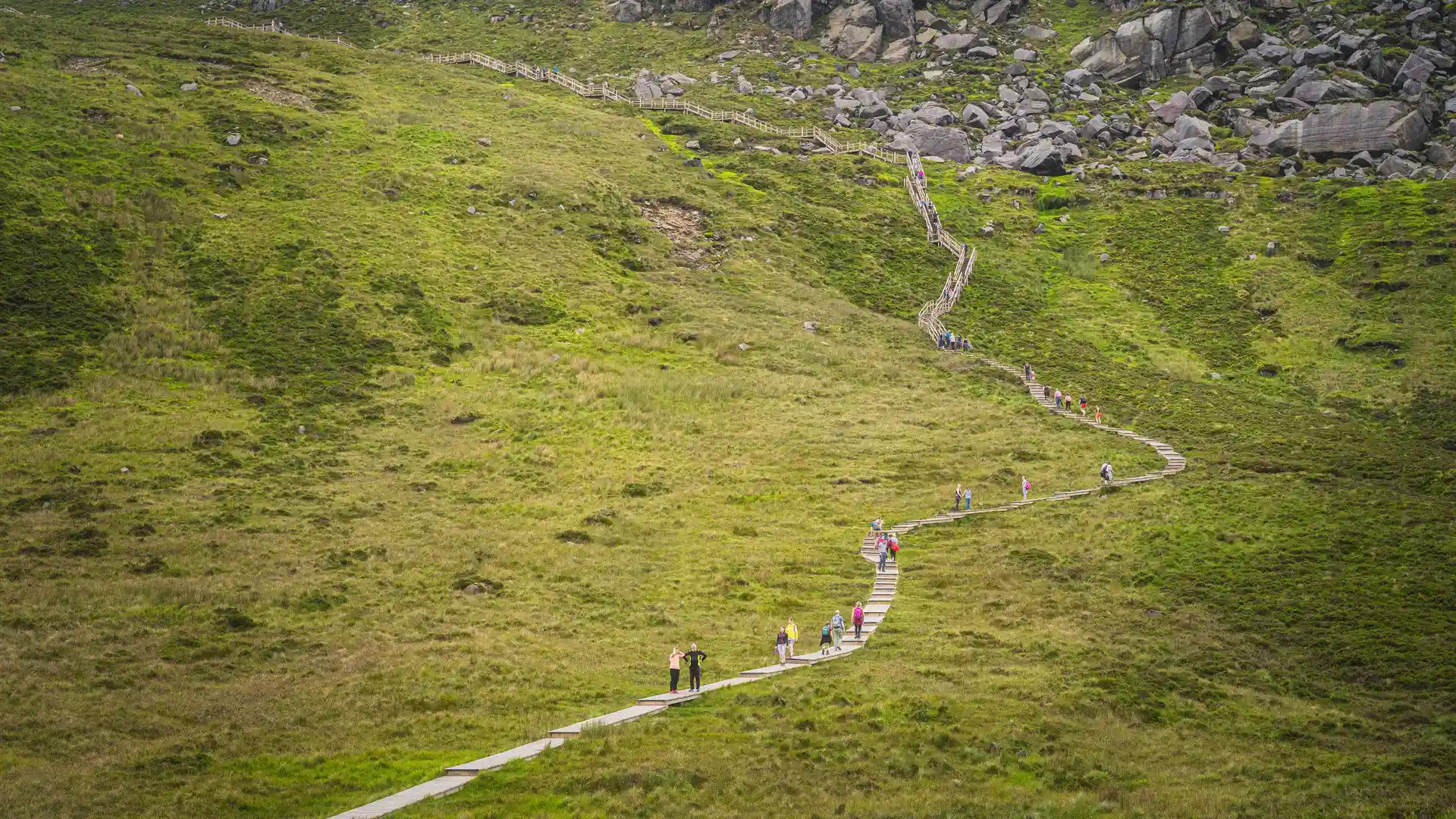
Higher ground near Cuilcagh and the western hills introduces short upland sections, where tracks climb above the lakes before returning to the shoreline.
Together, these lakeside, island, and low ridge routes form a connected network that supports circular walks and longer multi-day crossings between towns.
Areas of the Fermanagh Lakelands
Enniskillen and the central islands, the western shores around Belleek and Lower Lough Erne, and the eastern stretches around Lisnaskea and Upper Lough Erne each present distinct combinations of woodland, water, and low farmland while remaining closely linked by the lake system.
Beginning to explore the Fermanagh Lakelands
The Fermanagh Lakelands function as a continuous water landscape rather than a single valley or ridge. Following the shorelines and crossings shows how lakes, islands, and settlement shape movement through this interconnected lowland region.
Frequently Asked Questions
What terrain should I expect?
Mostly level or gently rolling ground, with lakeside paths, rural lanes, woodland tracks, and occasional short climbs.
Are there longer routes?
Yes. Shoreline sections and road links can be combined to create extended stages around Upper and Lower Lough Erne.
Are there protected landscapes?
Yes. Parts of the region fall within the Cuilcagh Lakelands Geopark and other protected wetland and shoreline areas.
Is the region remote?
No. Towns and villages appear regularly around the lakes, and crossings are frequent.
Can routes be combined easily?
Yes. Bridges, causeways, and shoreline connections allow routes to link islands and peninsulas without retracing long sections.