
France – Walking Trails, Landscapes & Wild Places
A Country of Mountains, Coastlines, Rivers, and Rural Landscapes Shaped by Routes and Regional Identity
France is defined by its walking routes, varied landscapes, and the close relationship between land and place. An extensive network of long-distance GR trails, historic paths, vineyard tracks, canal towpaths, and quiet rural lanes links mountains, coastlines, river valleys, forests, and villages, creating one of Europe’s most established environments for self-guided travel and walking.
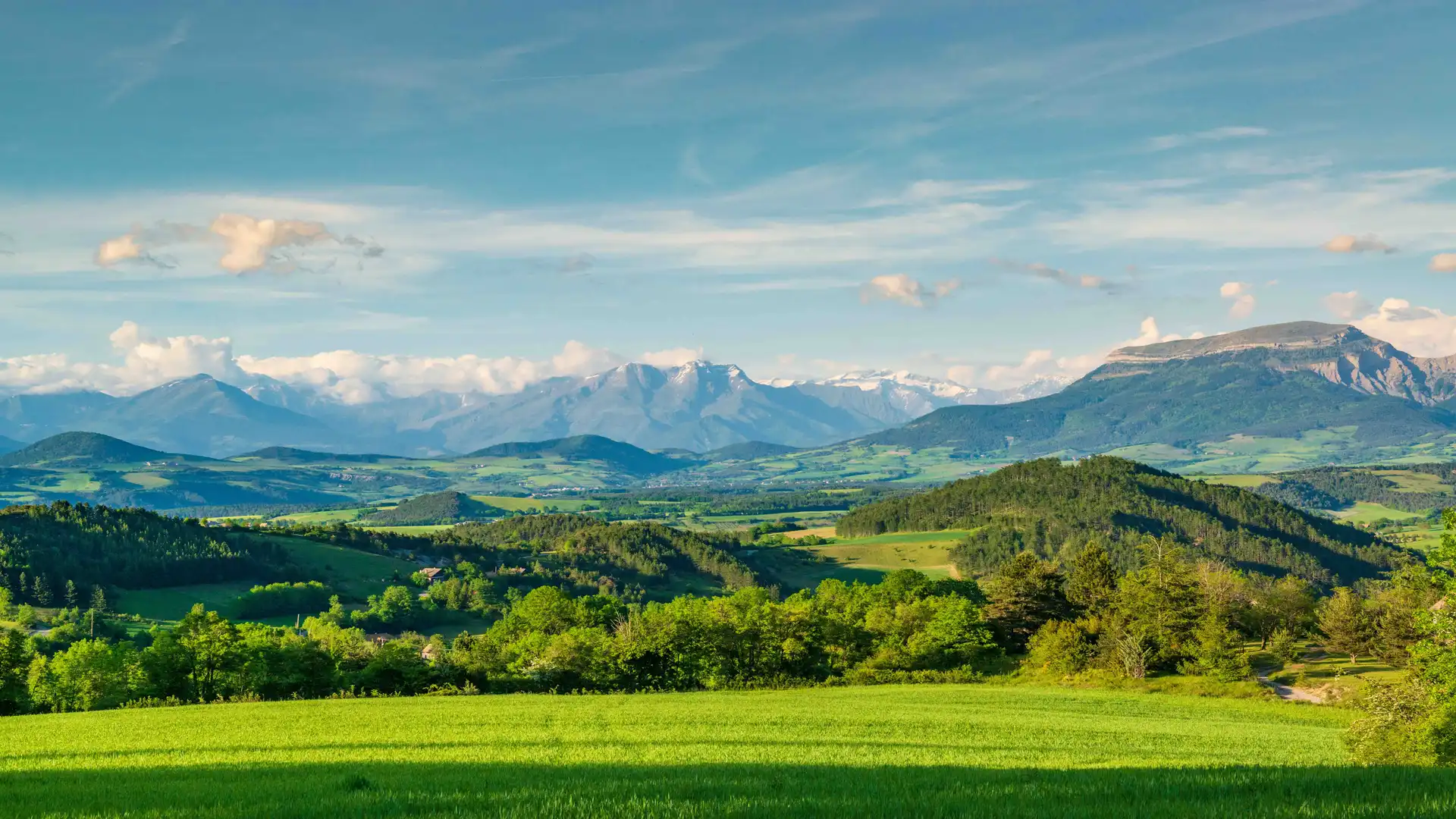
The geography changes dramatically from region to region. High alpine ranges rise in the east and south, broad plains and farmland stretch across the centre, and long coastlines face both the Atlantic and the Mediterranean. Routes move between these environments with ease, connecting upland passes, wooded hills, vineyards, wetlands, and small towns where daily life remains closely tied to the landscape.
Much of the countryside is protected. National Parks, Regional Natural Parks, and designated landscapes safeguard mountain ecosystems, river corridors, forests, and coastal habitats. These protected areas sit alongside working farms, historic settlements, and market towns, preserving both biodiversity and longstanding cultural patterns of land use.
Movement through France often follows historic lines. Pilgrimage routes, trade roads, shepherds’ tracks, and centuries-old footpaths form the backbone of today’s trail network. The red-and-white waymarked GR routes in particular create a coherent system that links regions across the country, allowing walkers to travel long distances through changing terrain while remaining closely connected to place.
Walking here is shaped by variety. One day might follow vineyard paths or canal banks, another climb into alpine meadows or trace clifftop headlands. Distances unfold gradually, with frequent villages and small towns offering natural stopping points that encourage a slower, more attentive way of travelling.
This is a country best understood step by step: through its trails, protected landscapes, and wild places that together form one of the most diverse walking environments in Europe.
Explore France by Region
The French Alps
High mountains, glacier valleys, and alpine meadows define this eastern range. Long-distance routes cross passes between France, Italy, and Switzerland, linking lakes, forests, and historic mountain towns.
The Pyrenees
A rugged natural border with Spain, shaped by deep valleys, high ridges, and remote upland terrain. Trails follow shepherd paths and mountain routes through quieter, wilder landscapes.
Provence and the Côte d’Azur
Limestone hills, Mediterranean coastline, and vineyard country. Paths connect hilltop villages, calanques, and open countryside shaped by light, sea, and seasonal change.
Brittany
A maritime landscape of headlands, beaches, and fishing harbours. Coastal paths trace exposed Atlantic cliffs, while inland routes pass through woodland and river valleys.
Normandy
Rolling farmland and historic shoreline. Clifftop walks, tidal bays, and quiet rural lanes connect coastal settlements and pastoral countryside.
The Loire Valley
Riverside paths, vineyards, and château landscapes. Gentle routes follow the Loire and its tributaries through fertile countryside and historic towns.
Central France & the Massif Central
Volcanic uplands, high plateaux, and wide horizons. Quiet trails cross remote terrain dotted with small villages and forested valleys.
Burgundy
Low hills, canal paths, and vineyard landscapes. Rural tracks and towpaths link historic towns and agricultural countryside shaped by wine and farming traditions.
Alsace & the Vosges
Forested hills, vineyards, and borderland heritage. Trails move between valley towns and wooded ridgelines with broad views across the Rhine plain.
South West France
River valleys, limestone plateaux, and medieval towns. Long routes follow pilgrimage ways and rural paths through countryside rich in history and agriculture.
Northern France & Hauts-de-France
Open farmland, coastal dunes, and historic landscapes. Coastal walks and inland routes connect villages, estuaries, and cross-border paths into Belgium.
Corsica
A mountainous island of ridges, forests, and turquoise coastline. Inland and coastal routes reveal strong contrasts between high terrain and sheltered bays.
Beginning to explore France
France’s walking trails, landscapes, and wild places form a connected network rather than a single experience. Exploring by region allows the character of each landscape to emerge naturally, revealing how geography, history, and culture continue to shape the country on foot.
Frequently Asked Questions
What makes France distinctive for walking?
France has one of Europe’s most extensive waymarked trail systems, linking mountains, countryside, coast, and villages through a coherent national network.
How are walking routes organised in France?
Routes include long-distance GR trails, regional paths, canal towpaths, vineyard tracks, and local rural footpaths connecting towns, protected landscapes, and countryside.
What types of landscapes can be explored on foot?
Alpine mountains, coastal cliffs, river valleys, forests, farmland, vineyards, wetlands, and rural villages — often within the same journey.
Is France suited to slower, self-guided exploration?
Yes. Frequent settlements, established paths, and strong regional identity make France well suited to gradual, independent travel at a steady pace.
Are large areas of countryside protected?
Yes. National Parks and Regional Natural Parks protect diverse environments across the country while maintaining public access for walkers.